If you’ve been trying to figure out how to control anger issues, you are definitely not alone. Learning how to calm down when angry can significantly improve our relationships and even our health. This post shares easy, research-backed anger management tools and relaxation techniques for anger issues. Let’s take a breath, and get started!

Learning how to control anger issues can feel frustrating when it keeps showing up faster or stronger than you expect. As a teacher and embodiment coach, I focus on practical, body-based ways to calm down when angry that are accessible and effective.
In this post, I’ll share 7 simple, research-backed anger management tools and relaxation techniques for anger issues that you can use right away. Whether for yourself or to support a child or multilingual student.
You’ll learn how to deal with anger issues without suppressing them, how to regulate emotions in the moment, how to respond in ways that improve relationships and help you feel more in control, and more!
This post is all about how to control anger issues
How to Control Anger Issues: 7 Ways to Control Anger That Are Truly Effective
Before we get into the steps, it helps to know this: learning how to control anger issues isn’t about getting rid of anger. It’s important to recognize it early, so you can calm your body and choose what to do next, instead of reacting on autopilot.
The 7 steps below will show you exactly how to deal with anger issues in the moment, using simple anger management tools and techniques you can come back to when needed.

Step 1: Notice Anger Issues Early (Before They Turn Into Anger Outbursts)
The first step in learning how to control anger issues is noticing what’s happening before the anger takes over. Once it turns into anger outbursts, it becomes much harder to control your anger or deal with anger issues in the moment. Catching it early gives you a real chance to respond differently.
This takes practice though, so give yourself the time and kindness you would give a friend.
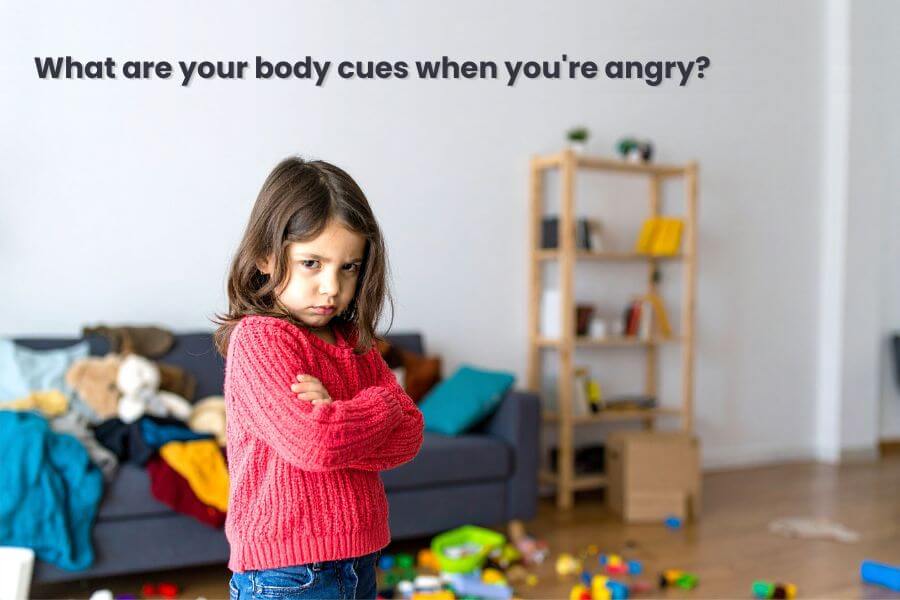
Anger issues don’t start with shouting or reacting. They start in the body. Subtly at first, then bigger and bigger until you can’t help but notice it.
Subtle signs might be:
- your jaw tightening
- your shoulders lifting
- your chest or face feeling hot
- fists clenching
- or your breathing getting faster and higher in your chest
These, among others, are early signs that anger issues are building. It starts with noticing what happens for you personally.
Besides changes in the body, you might also notice changes in your thoughts. Things can start to feel unfair, irritating, overwhelming, like you want to run or fight (depending on your FFFF response), or like people are out to get you somehow.
Your patience gets shorter, and small things feel bigger than they normally would. This is a great time to learn how to control anger issues.
If you’re supporting a child or multilingual student, this step is especially important. A child may already understand what they’re feeling, but not have the English words ready in that moment. Instead of focusing only on what they say, look at body signals and behavior. That’s often the clearest way to quickly understand and support anger issues early.
A simple way to practice body awareness is to pause and ask yourself:
“What is my body doing right now?”
“Am I starting to feel tense or overwhelmed? If so, where do I notice that in my body?”
“Can I still feel my feet on the floor and breathe to my belly?”
This might be difficult at first, if you’re new to checking in with your body. Or if past trauma prevents you from truly connecting to your body. Just noticing is enough, even if you notice nothing.
Eventually, you will learn to catch the moment with more and more ease, so you can use the next steps to control anger issues before they escalate.
Step 2: How to Control Anger Immediately by Pausing Before You React
One of the most effective ways to control anger immediately is to pause before you react. Even a few seconds can stop anger outbursts and give you space to deal with anger issues more calmly.
When anger shows up, your body prepares to react fast. That’s why it can feel like things happen before you’ve had time to think. Pausing interrupts that pattern and helps you control your anger instead of acting on impulse.
With practice, you can:
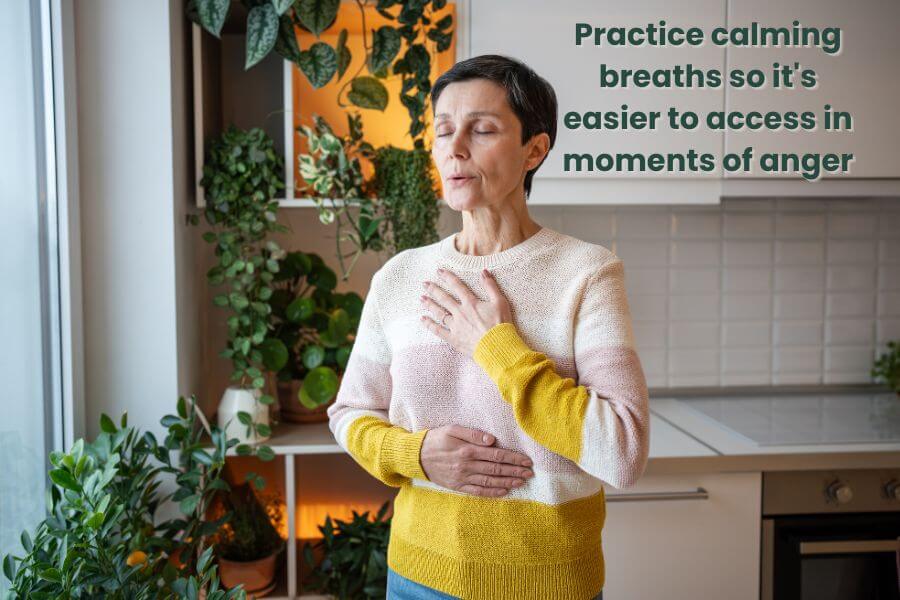
- take one slow belly breath, then another
- step back physically, bring your attention to your feet and belly
- count to five before speaking
If you’re supporting a child or multilingual student, model the pause instead of explaining it with words. Step back, put your hand on your belly (showing belly breaths) and show you are looking at your feet and placing them hip-width apart, pointing forward. That gives them something they can follow, even without words. It’s especially helpful to practice this before, so that when big emotions occur, they know what your signals mean.
This short pause is often the difference between reacting out of impulse and choosing how to respond from autonomy. And it’s a key part of learning how to control anger issues in the moment.
If you want simple breathing tools you can use right away, read this post next.
Step 3: How to Calm Down When Angry: Use Relaxation Techniques for Anger Issues
After you pause, the next step in learning how to control anger issues is to actively calm your body. This is how to calm down when angry in a way that effectively changes what’s happening inside you.
Anger speeds your body up (it activates your nervous system), so you need tools that slow it down.
Try one of these simple relaxation techniques for anger issues:
- take a slow breath out longer than you breathe in
- splash cold water on your face or hold something cold
- tense your muscles for 5 seconds, then release
- go for a short walk or shake out your legs
Use your voice here too: slower and softer sends a message to your or the other person’s nervous system that it’s safe. And remember that if you choose to go for a walk or leave the room, that you communicate to the other person that you’ll be back or you’ll finish the conversation later.
And DO follow up! That’s how you build trust. People feel the need to keep arguing because they know once you leave it is the end of the conversation. Following up without them asking ensures you can step away when needed because the mutual trust and respect is there.
If you’re supporting a child or multilingual student, show one of these actions instead of explaining it. As always, it’s most effective to practice this outside of big emotion moments (with help of their home language for example).
In short, regulating your body is a foundational skill for how to control anger issues and to regulate emotions in the moment.

Step 4: How to Deal With Anger Issues Without Making Them Worse
Once your body has started to calm down, the next step in learning how to deal with anger issues is allowing the feeling without letting it take over.
This is what is often the most difficult step because you have to – you guessed it – FEEL. Typically, people either push anger away (“I shouldn’t feel this”), or they stay in it long enough that it builds up, and up. Neither helps you control anger issues. And they both have consequences that you’d likely rather avoid.
But how do you feel anger without losing control? Think of this step as feeling with a boundary.
Try this:
- name it: “I’m feeling angry”
- keep your attention on your body (not on the story or situation)
- stay with the feeling for a few breaths (belly breaths because that’s what calms you down vs breathing in the chest)
Then move on to the next step. You’re obviously not trying to stay in the feeling forever. You’re just giving it space so it doesn’t come out sideways later.
If you’re supporting a child or multilingual student, keep it simple and physical. Stay calm yourself and give them space. Model a slow breath if possible. At the same time, hold the boundary: move objects away, guide them to a safer spot and e.g. use a cue like “here” or “pause” to do so (useful to decide and practice those before it’s truly necessary).
By doing this you’re showing two things at once: the feeling is okay, and the behavior has limits. That’s how you start to control anger issues and regulate emotions without suppressing them or letting them spiral.

Step 5: How to Identify Anger Triggers
Now that you’ve paused, calmed your body, and allowed the feeling, the next step in learning how to control anger issues is to briefly notice what triggered it.
Keep this simple. Definitely do not analyzing everything right then and there. You’re just getting a quick sense of what set it off.
You might ask yourself:
- “What just happened?”
- “Did something feel unfair, overwhelming, etc.?”
That’s it.
This step helps you deal with anger issues more clearly, but it’s not the moment for deep reflection. That comes later, because what feels triggering can be different for everyone and is quite personal. Right now, you’re just connecting the feeling to what happened so you can choose your next step.
If you’re supporting a child or multilingual student, you can sometimes model this without needing shared language. Use simple words and gestures, or point to what just happened if possible. You’re helping them connect the situation to the feeling.
You can also practice dealing with big emotions by giving them a journal they can write in in their home language so they still get to process. Or use a tool like Google translate to say “what happened that made you angry, tell me in 1 sentence”, and then have them reply in their home language.
You might notice patterns over time, but for now, keep it light and move forward.
Step 6: How to Control Your Anger: Use Anger Management Tools and Techniques to Control Your Anger
Now that you’ve paused, calmed your body, allowed the feeling, and noticed what triggered the feeling, the next step in learning how to control anger issues is choosing a clear, safe action.
Anger management tools and techniques help you control your anger, and can give you real confidence in knowing you can deal with similar situations in the future.
Try one of these:
- change the environment: step outside, move to a quieter space (like your room or garden)
- use a reset routine: drink water, wash hands, or sit in a designated calm spot
- follow a simple sequence: breathe → sit → wait → continue
Depending on how strong the anger feels, some tools will work better than others. We’ll look at that more closely below.
If you’re supporting a child or multilingual student, keep it concrete and repeatable. For example, consistently guide them to the same calm spot, sit with them, and model a calming technique like a slow breath. Use the same short cue each time (“breathe” or “sit”) so they learn the routine and know what to do when it’s necessary.
Visual tools can be great here too. Simple printable breathing cards or step-by-step calm-down visuals give children something clear to follow. And once kids know how they work, they can use them autonomously.
That’s how you start to control anger issues and build useful anger coping skills over time.
A calm-down space can make these steps much easier to use, especially for children. See how to create one here:
Step 7: How to Release Anger and Manage Anger Without Exploding
The final step in learning how to control anger issues is releasing anger in a way that doesn’t harm you or others.
If you skip this step, the feeling often builds back up. But how to release anger without exploding or losing yourself in it? You let the energy move in a way that is safe. Might sound woo, “moving energy”, but that’s basically what it is. Let’s try it!
Try simple, controlled ways to release anger:
- push your hands against a wall or desk
- squeeze something tightly and slowly release (an object, not your co-worker – thank you)
- do 10–20 seconds of strong movement (stomp, shake arms), then pause
- write one sentence about what you feel
The key is: short, contained, and followed by a pause.
If you have more time, a fellow embodiment coach once gave me the tip to do an exercise like that for max 1 minute, then journal 1 minute, and alternate that for a total of 10 minutes. That’s how you manage anger, or other big feelings, without escalating it. Plus you train your body awareness and reflection skills, winning!
If you’re supporting a child or multilingual student, guide them step by step:
- show: press hands together
- say one word: “push”
- pause together
- then: “sit” or “breathe”
You can also draw two simple boxes: one for “what happened” and one for “feeling,” and let them draw instead of explain. Make sure they have plenty of colors to choose from for the feeling box, and maybe some softer materials besides pencil so they can press harder and go all out if they need to (although it’s not art therapy, but why not?).
These are practical anger management techniques that help you control your anger and build real anger coping skills over time.
How to Deal with Anger Issues When They Feel Too Strong to Control
Sometimes anger feels too strong for the usual steps to work right away. In those moments, learning how to deal with anger issues means adjusting your approach based on the intensity of what you’re feeling.
Think of anger in levels:
- Low: irritated, frustrated → pause + breathe works
- Medium: tense, overwhelmed → body calming + step away
- High: intense, explosive → you need to release some energy first
If your anger is high, don’t force yourself to “calm down” immediately.
Start with a short, controlled release:
- stomp your feet for 10–15 seconds
- push your hands against a wall
- do push-ups with focus on your breath
Then pause and use the relaxation techniques for anger issues from earlier.
If you’re supporting a child or multilingual student, guide this clearly:
- show the action (stomp, push)
- use one word: “push” or “stomp”
- then: “stop” → “breathe”
This helps them regulate emotions without needing a large English vocabulary.
These are simple but effective anger management techniques that help you calm down when angry and learn how to control anger issues. Even when it feels out of control.
Helpful Tips for Controlling Anger Issues
If you want to get better at controlling anger issues, small habits make a big difference over time. These helpful tips around how to control anger issues are simple, but very effective when used consistently.
- Don’t try to solve problems while you’re angry. First calm down when angry, then come back to it.
- Reduce stimulation when possible (noise, screens, multiple demands, anything stressful) to make it easier to regulate emotions.
- Practice these anger management techniques when you’re calm, not only in the moment.
- Keep your tools visible (for example, a calm-down corner or simple visual steps).
- After the moment, write one or a few sentences about what happened. This helps you notice patterns over time. Plus, writing slows you down, so don’t fall into the common trap of thinking “I’ll do it in my head”.
If you’re supporting a child or multilingual student, keep routines predictable and repeat the same steps each time. Preferable before big emotions occur. Great to use in an ESL lesson and go through the steps using their home languages. Eventually, familiar structure makes it much easier for them to learn how to control anger issues over time.
FAQ: How to Deal With Anger Issues and Control Anger
If you’re still wondering how to control anger issues, these quick answers cover some of the most common questions. They’ll help you calm down when angry and understand what’s happening in the moment. Choose simple, effective ways to regulate emotions.
How to calm down when angry fast?
If you need to calm down when angry fast, focus on one simple sequence: pause, slow your breathing, and change your environment if needed. If the anger feels strong, start with a short physical release (like pushing against a wall), then return to slower breathing. These steps help you control your anger instead of suppressing it.
Should you vent anger or does it make anger issues worse?
It depends on how you vent. Letting anger completely take over (yelling, hitting, etc.) often makes anger issues worse because it keeps your focus and energy on the feeling, making it harder to control your anger.
At the same time, ignoring or suppressing anger doesn’t help either. Anger is a natural emotion, and learning how to deal with anger issues starts with acknowledging what you feel.
A helpful way to think about it is this: expression can support you, but escalation keeps you stuck. The preferred outcome is to allow the feeling without feeding it, so you can regulate emotions and move forward more easily.
Why Do I Get Angry So Easily?
I think everyone probably knows someone who gets angry quickly, whether it’s themselves or someone else. Judging it is counterproductive. It’s here for a reason. Anger often shows up faster when your system is already under pressure.
For example, when you’re overwhelmed, overstimulated, tired, or dealing with too much for too long. In those moments, even small things can feel like the last drop.
For some people, the body reacts quickly with a “fight” response, which can look like irritation, snapping, feeling anger rise very fast, wanting to lash out, etc. Others may feel the same internal pressure that is anger, but express it differently, like shutting down or avoiding the situation.
Again, try not to judge it. It’s often a sign that your system is overloaded or trying to protect you in the best way it knows how.
In this post, we focus on how to control anger issues in the moment. Understanding your patterns more deeply can absolutely help too, but that’s something to explore while you’re not going through an anger outburst.
What are the best anger management techniques?
The most effective anger management techniques combine body-based calming (like belly breathing or feeling feet on the ground), simple actions (stepping away or using a calm-down routine), and safe ways to release anger. See this post for more in-depth explanations of these steps. Practicing these regularly helps you build strong anger coping skills over time.
How to regulate emotions when overwhelmed?
When emotions feel overwhelming, start by reducing intensity: pause, use your breath (longer and slower exhales), and simplify your environment. Simplifying can look like walking to a calmer space, turning off sounds or screens, or other things that cause stimuli.
Then choose one easy action to ground yourself. For example: name 5 things you can see, 4 things you can touch, 3 things you can hear, 2 things you can smell, 1 thing you can taste. Learning to regulate emotions takes practice, but small, consistent steps make a big difference. You can get there!
Final Thoughts: Manage Anger, Don’t Judge It
Anger is one of the most misunderstood emotions. It can feel intense and uncomfortable, and sometimes even scary, but that doesn’t make it wrong.
In fact, anger can be a sign that something matters to you. It can show up when a boundary is crossed or when you or someone else is trying to move out of feeling depressed or powerless. Anger can feel like finally getting some power back!
We’re not trying to get rid of anger or judge ourselves or others for feeling it. What helps is to learn how to control anger issues in a way that helps you feel more in control and more aware of what you need.
When you stop fighting the emotion itself, it becomes much easier to work with it. And from there, it’s possible to move toward clearer and more constructive responses over time. Even with calm. You’ll see!
Feeling overwhelmed by anger issues? Learn how to control anger issues, calm down when angry, and use simple anger management techniques.
If you’re supporting a child and want to understand how to stay calm and connected in emotional moments, this guide on co-regulation strategies can help.