Does your child crash into the couch, stomp instead of walk, chew their sleeves or slam every door? These 9 proprioceptive activities for kids use things you already have and give them awareness and control over their body!
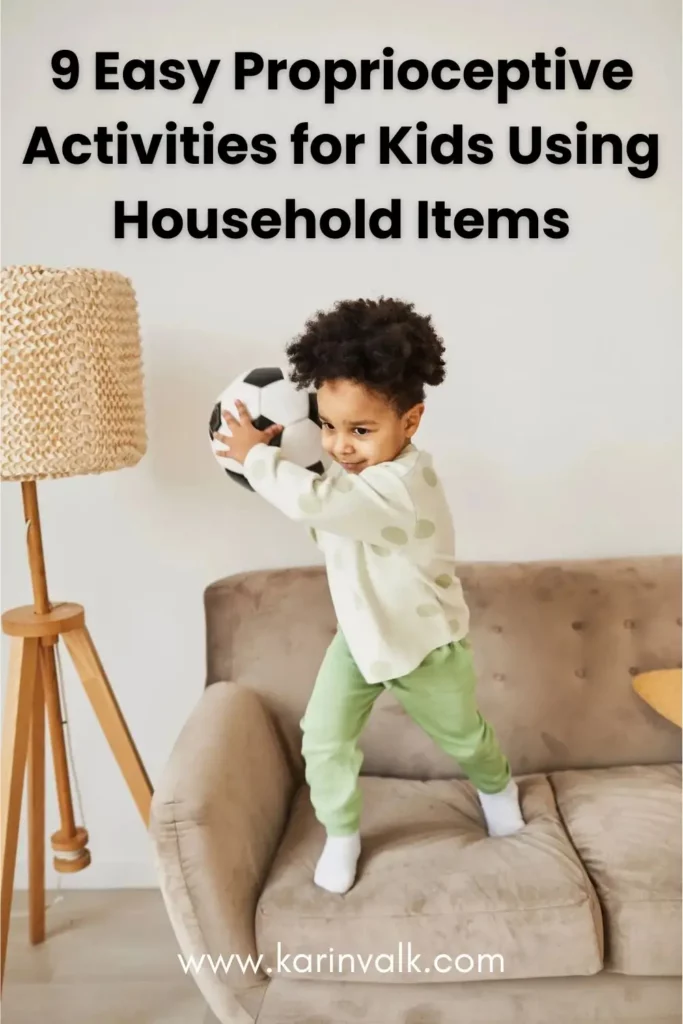
Some kids seem to need more. More pushing, jumping, squeezing and crashing. You can describe it perfectly… but you might not know what to call it, or what to do about it. Often, it’s their body asking for proprioceptive input.
As a parent, an embodiment coach, and former international school teacher, I’ve seen this many times. So I’m giving you 9 proprioceptive activities for kids, made with household items.
Maybe you’ve wondered: “What are proprioceptive activities?” Or: “How do I know if my child needs more proprioceptive input?” You’re going to learn about heavy work and proprioception activities for kids at home and at school. Plus easy sensory activities for snack time, calming activities before bed, and more.
Kids who crash and slam things often can’t feel how much force they’re using, so it comes out all or nothing. These activities help them feel their body first. Once they can feel it, they can control it: a big push when needed, a soft touch when not. That’s where calm and focus begin… and a real choice in how they move!
This post is all about proprioceptive activities for kids that build body awareness and control.
What Are Proprioception Activities for Kids?
Proprioception activities for kids are movements where the muscles and joints work against resistance. Think pushing, pulling, carrying, jumping, squeezing, and even chewing. Each one tells the brain where the body is and how hard it’s working. Occupational therapists have used them for decades, building on the sensory integration work of OT A. Jean Ayres.
Try this: close your eyes and touch your nose. Found it? That’s your proprioceptive system at work! So is proprioception a sense? Yes! It’s one of our “hidden” senses. If you want the full picture, I explain it simply in this interoception vs proprioception post.
What are examples of proprioceptive input?
- Carrying a full backpack,
- Pushing a shopping cart,
- Chewing a crunchy apple
- Doing push-ups or jumping jacks
- Getting a tight bear hug
So have some fun, do a big bear hug and jump on the bed (not that I’m recommending it… okay, maybe a little). Many proprioception examples look like everyday gross motor activities or “heavy work”. Good news, because you don’t need fancy equipment for proprioceptive activities.
For kids, this input works like a map of their body. The clearer the signals, the better they can feel where their arms and legs are. And a child who can feel their body has a much easier time controlling it.
Want the full story on these hidden senses, and how proprioception differs from interoception? Read this simple explainer:
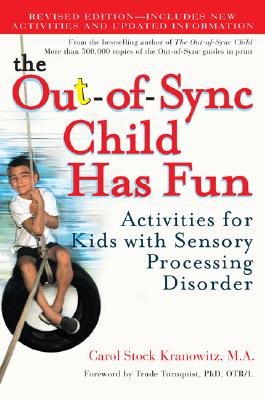
The Out of Sync Child Activity Book
A playful activity book by Carol Stock Kranowitz, packed with sensory activities for home and school, including lots of heavy work.
Why Proprioceptive Input Activities Matter
Proprioceptive input activities matter because some kids’ bodies send fuzzy signals. When a child can’t clearly feel where their body is, they turn up the volume themselves. Hello, crashing into the couch!
So how do I know if my child needs more proprioceptive input? Pediatric occupational therapists describe patterns like these:
- crashing, jumping, and playing rough
- chewing sleeves, pencils, or collars
- pressing so hard the pencil breaks, or slamming doors
- bumping into things or seeming tired and floppy
The first three are classic signs of seeking proprioceptive input. That last one can look like the opposite of a sensory seeker. Some kids are underresponsive to proprioceptive input: they barely register it, so they seem clumsy or low on energy. They need the same activities, for a different reason.
This link between proprioception and sensory processing is something OTs see every day. Either way, your child’s body is asking for information. Clear input gives them a better feel for their body, so they need less crashing to find it… which leaves room for calm and focus.
How to Use Proprioceptive Sensory Input: A Simple 4-Step Framework
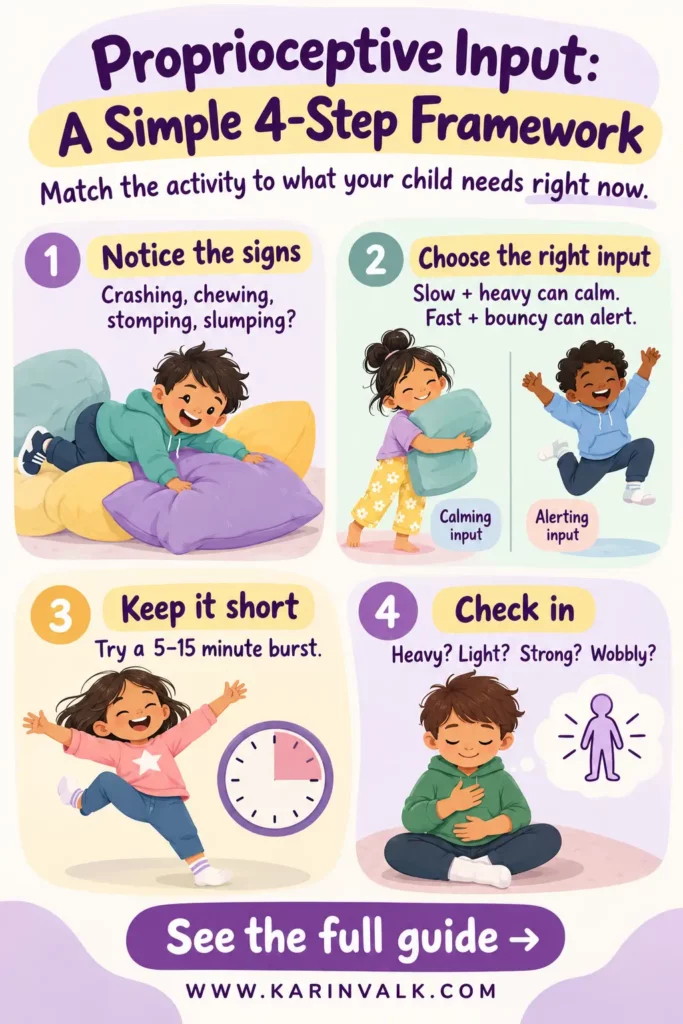
Proprioceptive sensory input works best when you match it to what your child needs in that moment. So before you grab the laundry basket for a pushing exercise, go over these four steps. They take seconds once you get the hang of it.
Step 1: Notice the signs
Is your child crashing, chewing, stomping or slamming doors? Or slumped on the couch like a melted ice cream? Both are their body asking for input, just in a different way.
Step 2: Choose calming or alerting
Are proprioceptive activities calming or alerting? They can be both. Slow, heavy work (pushing, carrying, a pillow sandwich, a bear hug) usually calms a busy body. Faster, bouncier moves (jumping, animal walks) wake up a sleepy one.
Step 3: Keep it short
How long should proprioceptive activities last? Short bursts of 5 to 15 minutes are plenty for most kids. A 2026 review of 25 classroom studies found that short movement breaks like these can improve attention. And mix it up! A 2025 research review found that different kinds of sensory input work better than just one.
Step 4: Check in with the body
Afterwards, ask: “How does your body feel now? Heavy? Light? Strong? Wobbly?” This is the step that builds awareness. So how can I improve my child’s proprioception? With lots of short, varied input and a moment to notice what changed. That’s how to improve proprioception over time: noticing turns into control… and control gives your child a choice.
Proprioception Sensory Activities for Multilingual & EAL Kids
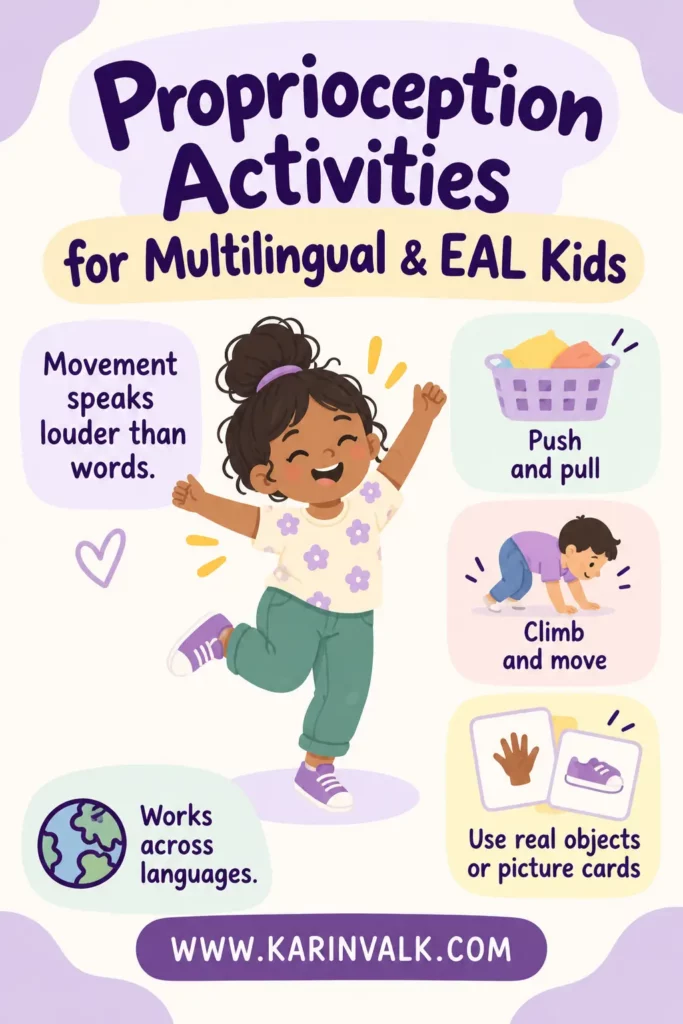
Teaching kids who don’t speak much English yet? Proprioception sensory activities work across languages, because the body does most of the talking. For multilingual kids, these sensory exercises hit “twee vliegen in één klap”(two flies in one smack – or: killing two birds with one stone – what’s with the animal aggression in those idioms?): body awareness and the English words for it.
Language teachers call this strategy Total Physical Response (TPR), an approach psychology professor James Asher developed in the 1960s. You say a short word and show the movement at the same time, and the child copies you.
That way, kids show they understand with their body without needing the vocabulary. Some children stay silent for weeks or even months, for various reasons, while they take in a new language. TPR lets them join in anyway.
A few things that help:
- Say it and show it together. Push the basket as you say “Push!” so the word and the move are associated with each other right away.
- Stick to a few key words. “Push”, “pull”, “stop”, “heavy”, and “soft” are plenty. Colorín Colorado suggests no more than seven new words at a time.
- Pair words with something to see. Point to the real object, or hold up a picture card.
- Check with the body. Once it’s familiar, say the word without showing it. Skip “Do you understand?” and try “Show me heavy!” instead.
You can also ask families for a few body words or other relevant vocabulary in the home language. And every activity below comes with its own EAL tip, so you know exactly what to say and show.
Teaching multilingual kids? Here are more fun ideas SEL activities they’ll love:
9 Proprioceptive Activities for Kids
Here’s your list of proprioceptive activities: fun sensory activities for kids, from big energy all the way to bedtime. Most of these sensory exercises use things you likely already have. Think: cushions, a blanket, a laundry basket, or a pillowcase. And if you don’t, I’ve linked them.
Pick one that fits your child’s mood today. No need to do all nine before lunch!
1. Proprioception Sensory Seeking: Cushion Crash Pad
Rainy day? It’s one of the best gross motor activities for preschoolers indoor or out. Proprioception sensory seeking often looks like a child who crashes into everything. So kids that need more sensory seeking stimuli, give them something safe to crash into! It might be the only time “Go crash!” counts as good parenting advice.
HOW IT WORKS
- Pile cushions and pillows in a spot, or stuff an old duvet cover with pillows.
- Your child jumps or flops onto it from standing.
- Finish with a few slow, firm squishes: press a cushion on top of them. Not on their face obviously, we like our kids breathing!
- Stay close and keep the area around it clear.
WHAT TO EXPECT
Expect big energy and giggles at first, because crashing wakes the body up. If your child gets too wild, switch to the slow squishes. They help the body calm down again. Then ask: “Big crash or small crash?” Little by little, your child learns how hard they land… and that they get to choose.
You’ll notice kids – especially boys – often go either all or nothing. Very soft or very hard. This is such an important body awareness practice to build controlled force.
EAL tip: Teach two words with big gestures: “Jump!” (arms up) and “Stop!” (flat hand out). Say and show them together, then only say them. “Jump… stop!” becomes a listening game.
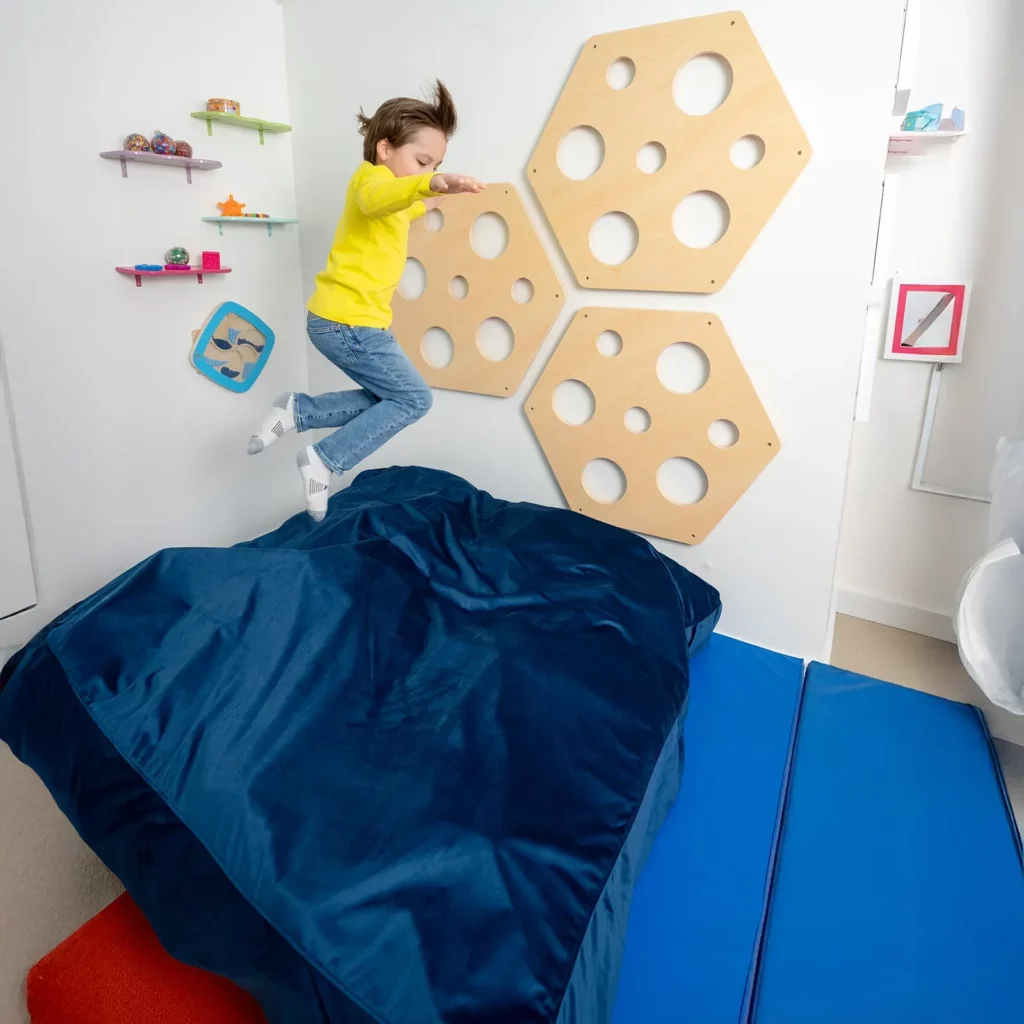
Crash Pad Fun & Function
A safe landing spot for sensory seekers who love to crash. Great for proprioceptive play that helps kids calm down.
Looking for more tools for kids who love to crash, chew or squeeze? Check out my favorite sensory toys:
Related post: 17 Excellent Sensory Toys for Autism That Help All Kids
2. Proprioceptive Activities for Preschoolers: Animal Walks
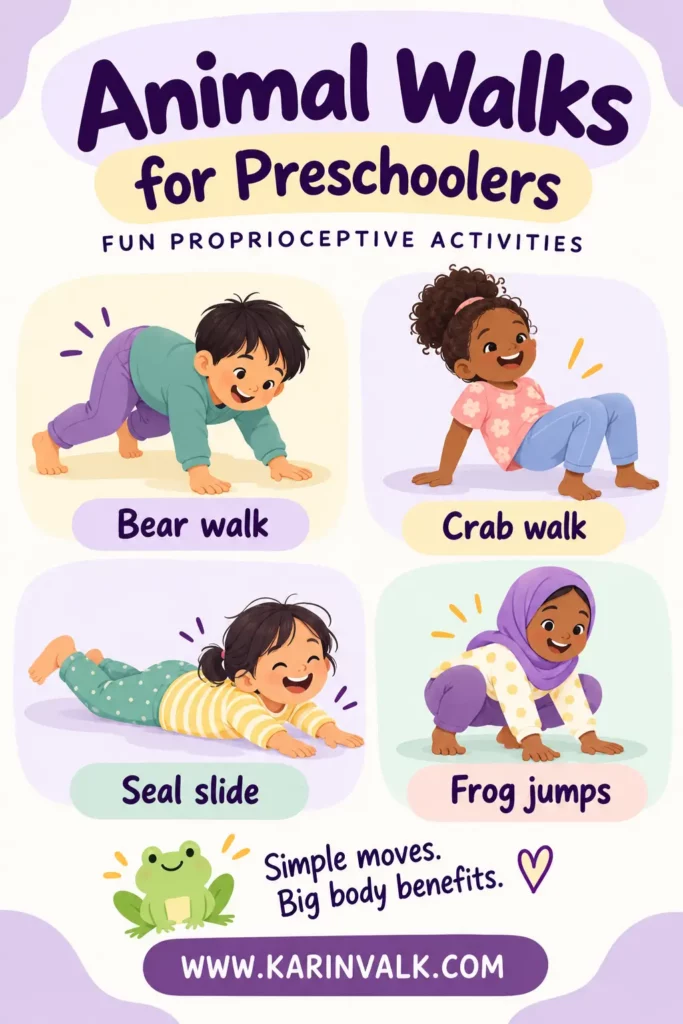
Proprioceptive activities for preschoolers don’t get much easier than this (although this was a success in KG and Grade 1 as well!). When little ones put weight on their hands and arms, their shoulders and core get lots of input. That makes animal walks great core activities for kids, too. Plus, they get to be a bear. Win-win! (Warning: your room may briefly turn into a zoo.)
How it works
- Bear walk: hands and feet on the floor, bottom up high, knees bent.
- Crab walk: sit, hands behind you, lift your bottom and walk. Challenge: go sideways like a real crab!
- Seal slide: tummy down, push up on straight arms and pull yourself forward. Their legs stay on the floor, dragging behind them. (Make sure they feel their feet and legs; often kids focus on their arms, but “leg awareness” is one of the main focus points in my coaching for a reason!)
- Frog jumps: squat with hands on the floor, then jump forward and land in a squat again.
- Wheelbarrow walk: you hold their legs while they walk on their hands.
Bonus lazy parent tip: tie a mop to their legs for the seal slide and get them to slide the floor clean, haha.
What to expect
Like most gross motor activities for preschoolers, some walks will feel easy and others hard. If one is too tricky, make the distance shorter or switch animals (try again another time tho!). Also, match the speed to their mood: faster for a sleepy body and slower for a busy one. Then ask: “Was your bear slow or fast?”. Choosing the speed and being aware of it helps build body control.
EAL tip: Hold up a picture of the animal, say its name, and model the walk. Then, do the walk together. Later, just hold up the picture and let kids show you. Or say the word without the picture, as a listening exercise.
3. Proprioceptive Play: Tug-of-War & Pillowcase Pull
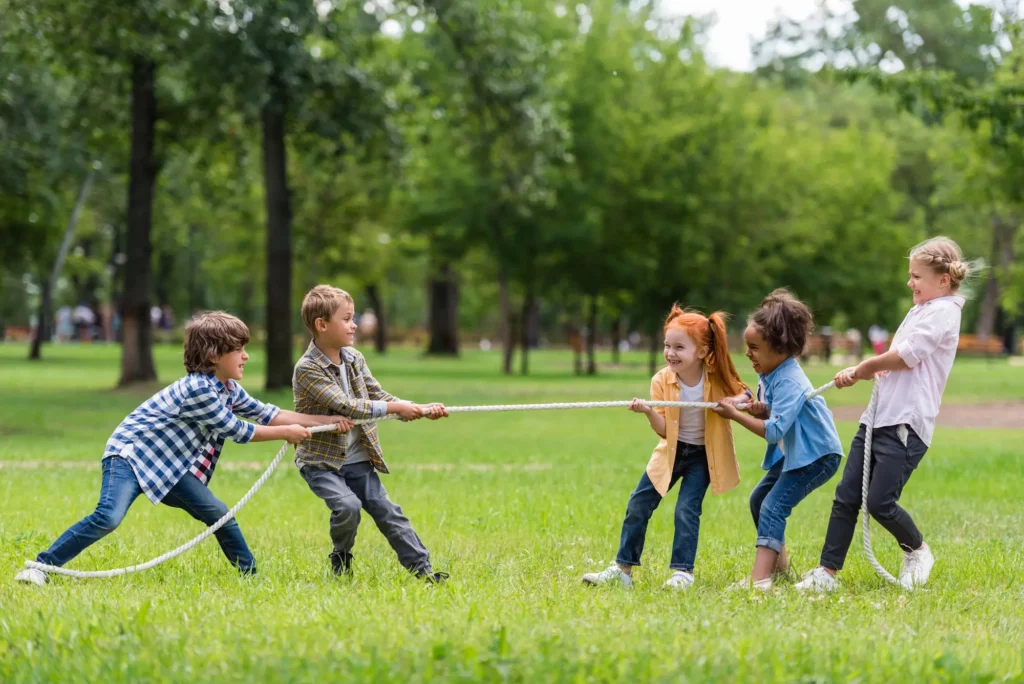
Proprioceptive play doesn’t need a gym. A towel and a pillowcase will do! Pulling is heavy work: it pulls against the whole body, from the hands all the way down to the feet.
How it works
- Tug-of-war: each of you holds one end of a tug-of-war rope. Or a DIY at-home version: a rolled-up towel or bedsheet. With bent knees, lean back a little, and pull.
– Agree on a clear “Stop!” before you start, and play on carpet or grass.
– Keep rounds short. For little ones, 30 to 60 seconds is plenty.
Kids often struggle with finding a middle ground. It’s often all or nothing. Can they pull at a 1 strength? What about at 10? What about at a 4? Or a 6?
My leg awareness tip for the tug-of-war: what is the difference between doing this exercise with knees on lock vs. bent knees?
- Pillowcase pull: fill a pillowcase with (soft – for more safety) toys and let your child drag it across the room, or up the stairs. It will take strength to pull. Try different weights together. Do they notice a difference with 1 or 2 toys added or taken away? What about 3 or 4? Where do they feel that difference in their body?
WHAT TO EXPECT
Expect some competitiveness and enthusiasm. And possible falls after a rope is let go of on one side. Aim for a “just right” challenge, hard enough to work but easy enough to keep going. Then ask between rounds: “Where did you feel it? Hands? Arms? Back? Legs?” Noticing where they feel the pull or pressure sensation builds body awareness.
EAL tip: Give “Pull!” and “Stop!” one gesture each: hands pulling an imaginary rope, and a flat hand out. Practice both pull and stop together before the first round. Ask them to repeat it and show understanding.
4. Proprioception Activities for Kids at Home: Laundry Basket Push & Chair Push-Ups
The best proprioception activities for kids at home might be sitting in your laundry room. What are examples of heavy work? Pushing and pulling are two of the best. This one is also one of the easiest heavy work activities for sensory seekers. Bonus: the laundry makes it to the bedroom. Eventually. The best proprioception activities for kids at home might be sitting in your laundry room.
HOW IT WORKS
- Laundry basket push: put a few heavy books in the bottom of a laundry basket. Let your child add some favorite toys, then push it across the floor.
- Chair push-ups: sit up straight and hold the sides of the seat. Push down with the arms until the bottom lifts off the chair. Use a sturdy chair that won’t slide or roll. Too tricky? Push against a wall instead. Or tell little ones the room feels small today, and ask them to help push the walls out!
Now play with the strength. Take a book out, or add one. Can they feel the difference? Can they push at an 8? What about a 2?
WHAT TO EXPECT
Expect slow, focused pushing. If the basket won’t budge, take a book out. If it flies through the room, add one. Heavy work activities for proprioceptive input like these can help kids calm their body Heavy work activities for proprioceptive input like these can help kids calm their bodies. Five to 10 minutes is plenty. Afterwards, ask: “Where did you feel the push?”
Want more pushing exercises? Try the push–pull activity in my post on interoception activities for kids (it’s activity 4).
EAL tip: Push the basket together as you say “Push!” Then take books out and put them back in while you say “light” and “heavy”. Let them feel the difference (otherwise it might be interpreted as less and more, or empty and full). Later, you can practice with short phrases like: “Show me heavy!”.
5. Proprioceptive Activities for Kids at School: Classroom Helper Heavy Work
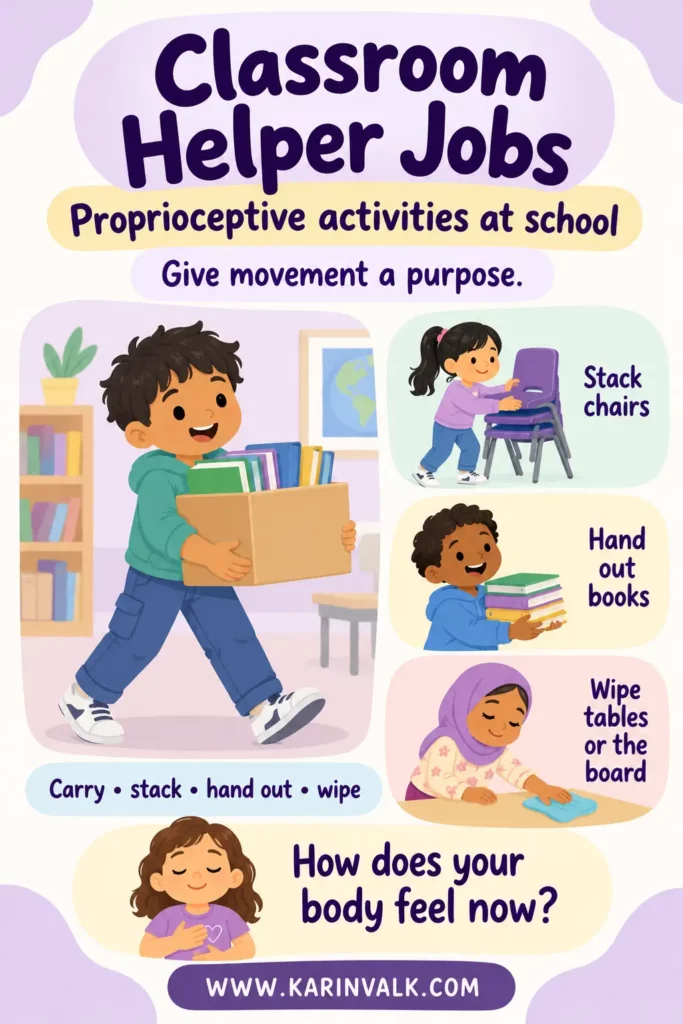
Proprioceptive activities for kids at school don’t need to take extra time or gear. Every classroom has heavy jobs that need doing. So hand them to the kid who needs to move!
HOW IT WORKS
- Stack or unstack the chairs at the start or end of the day.
- Carry a box of books to another classroom.
- Hand out the reading books and workbooks.
- Wipe the tables or the board.
Make sure the load is easy enough to carry. You can ask them questions to reflect on how heavy or light it is. Can they handle more? Should they? (A lot of them will want to push themselves to the max, so it’s a good little practice to learn to take good care of themselves, e.g. can they keep a healthy posture with that weight?).
WHAT TO EXPECT
These proprioceptive activities for the classroom are great as a classroom movement break. Make it their special job, so it feels like an honor. A 2025 research review found that active breaks during school hours can improve classroom behavior (shocker…). Plus, the teacher gets a tidy classroom. Winning!
When they are done ask something like: “How does your body feel now? Ready to sit?”. A quick reflective check-in like that helps to build a habit of paying attention to how they feel.
EAL tip: Helper jobs let a child join without needing a lot of vocabulary. Pair them with a buddy the first time, and teach one word for the job: “Carry!”. Or short phrases, depending on their level. There’s also cute little printouts with helper jobs depicted on them. I used those in my kindergarten class, but I don’t remember where I got them. You can probably find some on TeachersPayTeachers. Or create them with the class!
Want a spot in your classroom where kids can move to calm down? Check out these regulation station ideas:
6. Proprioception Exercises for Kids: “Strong Legs” Stomp & Stand
Proprioception exercises for kids often focus on arms. However, legs carry us all day, so let’s give them some love too! All you need is a floor and a wall. As an embodiment coach, I cannot stress the importance of leg awareness enough.
HOW IT WORKS
- Stomp march: march slowly around the room with big, heavy steps. Fair warning: your downstairs neighbors may have opinions. Next, call out numbers: 10 is a giant stomp, and 1 is a silent tiptoe. What does a 5 sound like? Or a 3? Their feet will tell you!
- Wall sit: stand with your back flat against a wall. Then slide down until you’re sitting on an invisible chair. Squeeze your thighs and bottom, and hold for 10 seconds. Next, slowly slide back up and rest. Repeat 3 times. As their legs get stronger, they can hold a little longer.
WHAT TO EXPECT
Their legs will probably get tired or shaky in the wall sit. That’s the perfect moment to notice! Ask: “Where do you feel it? Feet, knees, thighs, or bottom?” Then let them choose: hold a little longer, or slide up. First they feel their legs, then they decide what to do with them.
EAL tip: Play Simon Says with ways of walking: “Simon says stomp!”, “Simon says tiptoe!”. Say and show each one together, then let kids lead. If you’ve taught them relevant vocabulary around, for example, feet, legs, body sensations, then you could repeat these. Repeating language in a meaningful context is effective.
7. Best Proprioception Exercises for Kids: Elephant or Feather?

Of all the best proprioception exercises for kids, this one is my favorite. You call out “Elephant!” or “Feather!” and your child does the same move. Heavy or light. It’s one of those coordination activities that looks like a silly game. Meanwhile, kids practice using just the right amount of force.
HOW IT WORKS
- Landings: jump and land like an elephant. Then land like a feather. What do your knees and feet do differently?
- High-fives: give an elephant high-five, then a feather high-five.
- Drawing: draw a line pressing hard, then so lightly you can barely see it. Hand proprioception activities like this one help with pencil pressure, too.
Once they’ve got both ends, find the in-between. For the drawing exercise, can they draw a gray that’s not too dark and not too light? And for the Elephant & Feather exercise, what does in-between look like? E.g. a cat walks stealthier than an elephant, but feels more firm than a feather. Kids can come up with all kinds of creative ideas; have fun with it!
The goal is to practice body awareness and control.
WHAT TO EXPECT
For kids who love to crash, the feather is usually the tricky part. If the feather keeps turning into an elephant, try it in slow motion first. Then ask: “Which one was harder?” Finally, let them pick: elephant or feather? Feeling the difference, then choosing. That’s building body control.
EAL tip: Hold a real feather as you say “feather”. Let kids feel how light it is in their hand, then show it with their body. You can have a few printouts of animals, if you want to stick to that theme, and show them for the in-betweens. Could be a great integration game if you happen to teach an animal unit as well.
8. Easy Sensory Activities: Crunchy, Chewy & Thick-Smoothie Straw
Does your child chew their sleeves, pencils, or collars? Then their mouth may be asking for proprioceptive input, too. Luckily, chewing gives the jaw lots of proprioceptive stimulation. So these easy sensory activities fit right into snack time.
HOW IT WORKS
- Crunchy: raw carrot sticks, apples, breadsticks, crackers, or popcorn.
- Chewy: dried fruit or other chewy snacks.
- Thick-smoothie straw: sip a thick smoothie, yogurt drink, or milkshake through a straw.
These are proprioceptive input examples you can eat! Now try a thin drink, then a thick one. Which one makes the mouth work harder?
WHAT TO EXPECT
Some kids munch right away, while others need time with new textures. So start with snacks your child already eats and likes. Afterwards, ask: “Crunchy or chewy: which one did your mouth like best?”. Next time, let them choose. Still chewing on clothes? A chew necklace gives them a safe option, with adult supervision.
Like the other proprioceptive sensory activities on this list, these sensory input activities for kids work best in short, regular bursts.
EAL tip: Give a sentence starter: “My snack is ___.” Kids fill in “crunchy” or “chewy,” then show it with a big bite. What other words for food textures do they know? What are they in their home language? Could be nice to have a little language talk during snack time and find similarities between them. Getting some proprioception exercise in, while encouraging their linguistic identities!

Chew Necklace
A safe chew for kids who chew sleeves, pencils, and collars. Gives the mouth the proprioceptive input it’s looking for.
Looking for a calm-down tool that works anywhere, no snacks needed? Try these fun breathing exercises for kids:
Related post: Fun Breathing Exercises for Kids: A Beginner’s Guide
9. Proprioceptive Activities for Kids Before Bed: Pillow Sandwich
Proprioceptive activities for kids before bed help a busy body wind down. And as calming activities for kids go, deep pressure works especially well. In fact, a 2025 review of 21 studies found strong evidence for deep pressure, especially for sleep and self-regulation.
HOW IT WORKS
- Pillow sandwich: your child lies on one pillow, and you place another pillow on top. Then press down slowly and firmly. Keep their head and face free (everything from the shoulders up).
- Blanket burrito: roll your child up firmly in a blanket, with their head out.
Then ask: “Harder or softer?” Go slow from 1 to 10 and ask what they prefer – if you even get to 10. Together, find their “just right” pressure.
WHAT TO EXPECT
Kids usually show you when it’s too much: they wriggle or tense up. So pay close attention to their body language. Remember, they are practicing this, so they might not know their body signals as well (yet). If that happens, ease off or stop, so they stay in charge of their own body and feel safe. Afterwards, ask: “How does your body feel now? Heavy? Sleepy? Calm?”
These calming proprioceptive activities are also great as regulation activities for kids. In a 2024 study, kids with weaker proprioception had more trouble identifying and managing their emotions. You’ll find more emotional regulation activities for kids in my interoception activities post.
Want a deep pressure activity that lasts after lights out? My son used a small weighted blanket when he was younger. I would massage his feet (great for anxiety relief, calming down, and connection with you as a parent), and put the blanket on. He loved it and slept better with it. Ask a professional for safety advice first, then see my weighted lap pads guide (pads are not for sleeping, blankets are).
EAL tip: Use the same few words every night, such as: “Squeeze… stop… sleep.” A daily routine helps new words stick. If you have multiple languages at home, you can choose one for bedtime routines and stick to that. E.g. read them a bedtime story in that language, and then do the proprioception activity with new vocabulary around body sensations and body parts (you could build up to a body scan practice which can be very calming).

Looking for weighted lap pads or weighted blankets, even a DIY one, perhaps? Check out this post with my favorites:
Related post: 8 Best Weighted Lap Pads to Tackle Anxiety
FAQs About Proprioceptive Activities for Kids
Proprioception exercises are moves where the muscles work hard: pushing, pulling, carrying or jumping. Think bear walks, a pushing a full laundry basket, or a big pillow squish. So what are proprioceptive exercises in everyday life? Often, the gross motor activities for kids you already know (hello, playground!). That’s why they are great as gross motor skills activities for kids and body awareness activities.
And how does proprioception work? The muscles and joints keep telling the brain where the body is and how hard it’s working. That message is proprioceptive sensory input. So what is proprioceptive sensory input good for? The more proprioception stimulation kids get, the clearer that message becomes… and the easier it is to feel and control their body. Not sure where to start? Try the 4-step framework above!
They can be. In a small 2025 study, autistic kids did vestibular and proprioceptive activities for 8 weeks, alongside physiotherapy. Afterwards, their hyperactivity and impulsivity dropped. So these may help as activities for hyperactive kids, too. Still, proprioceptive processing differs from child to child. That’s why proprioceptive activities for kids with autism work best when you follow your child’s lead and find what suits them.
It may. The 2025 review above included 7 studies of kids with ADHD, and two found better sleep with weighted blankets and massage. So for proprioceptive input and ADHD, deep pressure at bedtime is a good start. During the day, heavy work activities like #4 and #5 make great focus activities for kids before seated work.
No problem! Many proprioceptive activities for kids in the classroom fit right at the desk:
Desk push-ups: forearms flat on the desk, then lean in until your bottom lifts.
Bear hug: give yourself a big, firm hug.
Arm squeezes: squeeze up one arm, from wrist to shoulder. Then switch.
Pencil sharpening: a hand-held sharpener works the hands and fingers.
These small physical activities for kids take seconds, and nobody leaves their seat.
And as you can see in activity 5, there are plenty of ideas that don’t require space, but do result in a tidy classroom!
Both! If your child’s sensory needs get in the way of daily life, pediatric occupational therapy is the place to go. OTs are the specialists for sensory challenges, and they often build on sensory integration activities. In fact, many occupational therapy activities look just like the OT proprioceptive activities here.
And home counts, too. The 2025 review found strong evidence for sensory strategies parents use at home. Think of occupational therapy: kids learn the moves with the OT, then practice them at home… with a laundry basket, a pillow, and you.