In need of some great calming corner ideas? For many families, emotions run high after school, at bedtime, or during moments of overwhelm. Creating a cozy calming corner at home gives kids a place to regulate, reconnect, and reset. It doesn’t need to be fancy, and you might already have everything you need.
I earn commissions when you shop through the links below at no additional cost to you. As an Amazon Associate I earn from qualifying purchases.
I sometimes include Amazon links because I know ease and accessibility matter—especially for busy parents and teachers—but I’m also working on adding more options from smaller or values-aligned businesses. I’ll keep updating this post as those become available.

A calming corner is a dedicated space where kids can take a break, feel safe, and reset when big feelings arise; or even before they do. Many people think of “calming down” as something we do during a meltdown. However, emotional regulation is just as important when children are overstimulated, shut down, or simply need a moment to themselves.
These quiet little spaces can help kids feel more in control, whether they’re overwhelmed, dysregulated, or just not ready to talk. In this post, you’ll find calming corner ideas that are easy to set up, budget-friendly, and thoughtfully chosen to support emotional wellbeing at home.
You’ll also see calming corner tools, sensory suggestions, and printable resources you can use right away.
This post is all about great calming corner ideas that help kids regulate at home

What Is a Calming Corner and Why Does It Help?
When a child is overwhelmed, overstimulated, or unsure how to process what they’re feeling, it can be hard to know what they need. Especially in the heat of the moment. A calming corner offers a safe, non-punitive space where kids can go to self-regulate.
It’s not a time-out or a consequence. Instead, it’s a tool that builds self-awareness and emotional safety over time. Whether your child needs movement, quiet, or just a break from social interaction, a calming corner helps them reconnect with their body and emotions in a space that feels soothing and predictable.
You don’t need a special room or fancy setup. Even a small corner of the living room, hallway, or bedroom can become a supportive oasis when it’s set up with care and intention.
If your kids are struggling with big emotions, a calm down corner kit can be incredibly helpful. I created this one with visuals to support independence and agency. Please do check it out.
Product: Calm Down Corner Printables Kit: 20 Dyslexia-Friendly Pages for Kids

How to Set Up a Calming Corner at Home
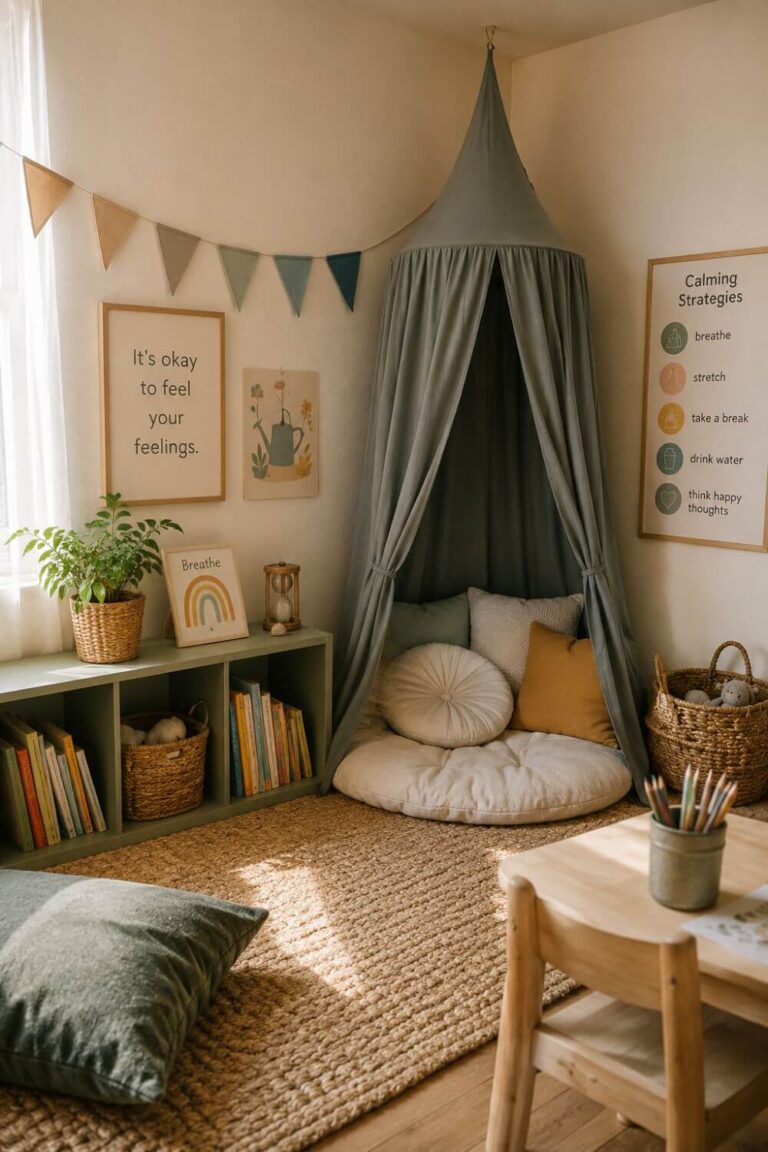
Setting up a calming corner doesn’t have to take up much space. It’s more about the feeling than the furniture. Start by choosing a quiet spot that’s a little out of the way. Somewhere your child won’t be interrupted too often, or at all. Corners of bedrooms or tucked-away nooks can work well. The key is to create a space that feels calm and safe, even if it’s small.
If possible, use soft textures and neutral lighting. A small rug, a cushion, or a low bench helps define the space. If your child prefers privacy, consider hanging a canopy or using a foldable screen. For kids who like to move, a wobble cushion or soft mat can add gentle sensory input.
The most important thing is that the space feels welcoming. It should be a place your child chooses to go, not a place they are sent. Think of it as a cozy pause button, definitely not a punishment zone.
If you’re looking for calming corner ideas for the classroom, you might also enjoy this related post:

10 Calming Corner Ideas for Home That Kids Will Actually Use
There’s no one-size-fits-all when it comes to calming corners. Some kids need sensory input and movement. Others just want quiet and something familiar nearby. These calming corner ideas are flexible, cozy, and designed to support emotional regulation. Whether your child is overwhelmed, shut down, or just needs a break.
You don’t need to use them all. Pick and choose the ones that fit your space, your child, and your budget. Even one or two calming corner tools can make a big difference.
1. Add Soft Seating to Make the Calm Space Feel Safe
Start with comfort. A calming corner works best when it invites kids to sit, sink in, or curl up. This might be a bean bag, a pile of throw cushions, or a soft play mat on the floor. If your child likes to rock or bounce, an inflatable wobble seat or a low chair can be incredibly regulating.
You don’t need to buy anything fancy. Even a cozy blanket folded on the floor can feel like a tiny safe haven. (And if it ends up being the same spot your dog naps in…well, I guess now it’s a multispecies regulation zone.)
Try this: Look for soft seating that’s washable, lightweight, and easy to move. That way, your child can help set it up and take ownership of the space.

Soft Seating: Bean Bag and Floor Cushion Options
Cat Bean Bag Cover (Amazon)
A soft, washable bean bag cover with a fun cat design. Fill it with plush toys or pillows for cozy, personalized seating.
2. Use Calming Corner Posters or Visual Tools
Visuals can help kids name what they’re feeling, even when words are hard to find. A feelings chart, a calming strategies menu, or a simple “how am I doing?” poster gives structure to big emotions without needing a long conversation. It’s also a way for kids to reflect privately before they ask for help.
These tools are especially helpful for kids who freeze when asked “How are you feeling?” (And let’s be honest: even adults sometimes need a little visual nudge.)
Try this: Tape a printable to the wall at eye level, or place a small visual in a standing frame. You could even laminate a few and rotate them depending on the season or situation.

Visual Tools: Feelings Posters and Calming Strategies
A complete print-and-use calming corner kit to help deal with big emotions. Designed to work for children who don’t yet read English fluently, children with dyslexia, and children who need visuals. Breathing, body awareness, feelings, calming strategies, and reflection.
3. Include Calming Corner Toys or Fidgets
Some kids need something in their hands to help regulate what’s going on inside. Fidget toys, stress balls, sensory putty, or textured objects can all provide just enough input to help kids stay grounded. For others, it’s less about “doing” and more about squeezing, twisting, or just holding something familiar.
It doesn’t have to be a curated Pinterest-perfect tray of regulation tools. A basket with a few fidgets your child already uses, or even a soft object they like to hold when upset, can go a long way. (And if you find yourself “testing” the stress ball when no one’s looking… welcome to the club!)
Try this: Place a small bin or fabric basket within reach so your child can choose what they need in the moment. Too many choices? Start with two or three simple tools and build from there.

Tactile Tools: Fidgets and Sensory Items
Fidget Toy Set (Amazon)
A compact kit with squeezable, twistable, and stretchable fidgets. Perfect for hands that need to move to feel calm.

A great and effective tool is breathing exercises for kids. They can use them in their calm corner or together with you!
Related post: Fun Breathing Exercises for Kids: A Beginners Guide
4. Offer Sensory Calming Corner Ideas for Movement
Not every child finds calm by sitting still. Some kids regulate best through movement, especially if their bodies are craving proprioceptive input. You know, that grounding, deep-pressure feedback that helps them feel safe and steady. In a calming corner, this might look like sitting on a wobble cushion, stretching on a soft yoga mat, or pressing their hands against the wall to feel resistance.
You can also add visual movement prompts, like these cute animal movement and sound cards, that show fun actions such as: stand on one leg like a flamingo, hiss like a snake, or waddle like a goose. These kinds of slow, intentional movements can help kids reconnect with their bodies and settle their nervous system. And if you find yourself needing a cuddle like a koala… just consider it bonus embodiment.
Try this: Keep one or two simple tools nearby: a stretch card, a balance cushion, or even a soft resistance band. These help offer movement without turning the space into a play area.

Wobble Seat or Balance Board
Wobble cushion for kids (Amazon)
Great for grounding, balance, and subtle movement without making the space feel too active. Also great for improved focus.
5. Try Calming Lights or Cozy Lighting
Lighting changes everything. Bright overhead lights can feel harsh when kids are already overstimulated, while soft lighting signals safety and calm. In a calming corner, even a small change—like adding a warm-toned lamp (like this cute capybara) or a string of smart fairy lights—can help your child feel more at ease.
Some families use lava lamps, star projectors, or dimmable LEDs. Others go simpler: a salt lamp on a shelf, a paper lantern, or even just turning the main lights off for a moment. What matters most is that it feels different from the rest of the room. A cue that this space is just for slowing down.
Try this: Choose a light source that’s soft, not flashy. If your child is sensitive to visual input, go for a single warm light instead of twinkly or color-changing ones.

Cozy, Calming Lights
Amber Clip‑On Book Light (Amazon)
Soft, amber-colored light (99.94% blue‑free) supports winding down without disrupting sleep.

6. Use Calming Colors or a Calming Color Palette
Color sets the mood, often before we even realize it. Soft blues, gentle greens, and pastel purples can all help create a sense of calm. Even if your child’s calming corner is just one part of a larger room, using calming colors in that specific spot helps it feel like a separate, safe zone.
You don’t need to repaint the walls or start from scratch. A single throw pillow, blanket, or poster in a soothing tone can signal that this is a space to unwind. Texture matters too: think fuzzy blankets, soft cotton, or smooth floor cushions.
Try this: Stick to just one or two calming colors to start. If your child helps choose them, it builds ownership. And it might even prevent the space from being rejected after all your effort (just saying).

A fun kids playroom rug or a calming, soft and cozy kids rug might be just what your calming corner needs!
7. Set Up a Calm Corner Nook or Tent
Some kids love the feeling of being tucked away. A calming tipi tent for kids, canopy, or fort-like nook can add that extra sense of coziness and security. It creates a buffer from noise, light, and distractions, which can be especially helpful for kids who are sensitive to their environment.
You don’t need anything elaborate. Drape a light blanket over two chairs, use a foldable tent, or hang a canopy from a hook in the ceiling. This kind of setup is one of the most flexible calming corner ideas for nooks: small, simple, and deeply comforting. It’s so cozy, we should totally create these for adults too!
Try this: If your child enjoys enclosed spaces, let them design their “calm fort”. A couple of cushions, a low light, and something familiar inside can make it feel just right.


Looking for more ways to support kids’ emotional regulation? Check out this favorite:
8. Include a Self-Regulation Toolkit in Your Calm Down Corner
A self-regulation toolkit is a simple way to give kids options. It might include ninja breathing cards, stretch prompts, a small mirror for checking facial expressions, social emotional learning books, or even a sand timer to help with transitions. Think of it as a little menu of choices your child can use to feel more in control.
You can also add items that help track feelings or offer reminders, like a “zone of regulation” visual or a chart showing “what helps me feel better.” We don’t want to overwhelm them, just to make a few helpful tools visible and easy to reach.
Try this: Keep the calm corner toolkit low-maintenance and accessible. Use a tray, small bin, or even a pencil case, and let your child help decide what goes in. It gives them a sense of agency, which is regulation in itself.

Visual Tools for a Self-Regulation Toolkit
Feelings Flip Chart for Kids (Amazon)
Helps kids name emotions and explore calming strategies using clear visuals.
A sand timer works, but a visual timer is even clearer. Kids can watch the time shrink, so they know exactly how long a break lasts. Find my favorites here:
9. Let Kids Personalize their Calming Corner
The most effective calming corners are the ones that feel personal. Even small touches (like a favorite stuffed animal, a family photo, or a drawing they made) can make the space feel more inviting. For some kids, just having a familiar object nearby is enough to settle their nervous system.
Letting your child help choose what goes in the space can also reduce resistance. If they’ve ever declared, “I do NOT like that corner!” after you carefully set it up, you’re not alone. Personalizing the space gives them ownership and makes it more likely they’ll actually want to use it.
Try this: Offer a few “yes” options and let your child pick one or two special items for their corner. It doesn’t have to be cute or match your décor; it just has to feel like theirs.

Make It Personal
DIY Wooden Picture Frame Craft Kit (Amazon)
Kids can decorate their own frame and add a photo of the family, a pet, or something that makes them feel good.
10. Keep Calming Spaces Flexible and Age-Appropriate
What works for a four-year-old might feel ridiculous to a ten-year-old. Calming corners change as kids grow, and that’s a good thing. It means your child is learning what helps, and what doesn’t, and adjusting their environment to meet those needs.
For younger kids, you might include a soft toy, a simple feelings chart, a favorite book, or a quiet place to sit. Older kids or teens might prefer a journal, a calming or fun playlist, or even just a private space with low lighting and a familiar scent. It doesn’t need to look a certain way, it just needs to feel like a personal place to retreat.
Try this: Check in every so often to see if the calming corner still feels right for your child. Sometimes, just moving a few things or updating the tools is enough to keep it useful as they grow.

Journals for Kids
Big Life Journal (Amazon)
A beautifully illustrated journal that helps older kids reflect, reset, and grow their emotional toolkit.
These ideas set the scene, but once your corner’s ready, the real skill is using it well. My full user guide picks up where setup leaves off: what to say in the moment, and what to do on the days it doesn’t go to plan.
Related post: Practical Calm Down Corner Tips: The Complete User Guide
Final Thoughts on Creating a Calming Corner at Home
There’s no perfect version of a calming corner. It’s not about matching Pinterest boards or creating an ideal regulation routine. It’s about giving your child a space that feels safe, supportive, and theirs.
Even if you start small, what you’re building is emotional safety. Whether you add just a few cushions and a feelings chart, or set up a full cozy nook with sensory tools and calming lights, the most important thing is that your child knows this space is there for them.
If you try out any of these calming corner ideas at home, I’d love to hear what worked (or what didn’t!). Drop a comment below, or share a photo if you’re proud of your setup. Let’s inspire each other!