In international school life, third culture kids are often arriving, staying, or leaving. This has a deeper impact on belonging, identity, attachment, and emotional safety than we often realise. If you’ve ever felt unsettled without quite knowing why, this post will give you language for what’s really going on.
I earn commissions when you shop through the links below at no additional cost to you. As an Amazon Associate I earn from qualifying purchases.
I sometimes include Amazon links because I know ease and accessibility matter—especially for busy parents and teachers—but I’m also working on adding more options from smaller or values-aligned businesses. I’ll keep updating this post as those become available.
Living expat life means living in motion. And for third culture kids, that motion doesn’t just happen on moving day. It shows up in classrooms, friendships, family dynamics, and even in how safe learning feels. In international school communities, children (and adults) are constantly arriving, staying, or leaving, often without anyone naming what that does beneath the surface.
In this post, we’ll look at third culture kids through the lens of arrivers, stayers, and leavers. A framework by Doug Ota, widely used in international education and transition care. Not as labels, but as roles people move through over and over again. Understanding this cycle helps explain why some children seem unsettled, why others withdraw, and why support that works at one moment can miss the mark at another.
Whether you’re a parent, teacher, or adult who grew up internationally, this perspective offers clearer language, more compassion, and a better way to support kids in expat families as they navigate constant change.
And you’ll find some really, really good books by experts in the field.
This post is all about third culture kids: arrivers, leavers, and stayers.
Third Culture Kids in Expat Life: What Is Third Culture?
So what is third culture?
Third culture refers to the shared way of life that forms when people grow up moving between cultures. Often, but not always, outside their parents’ passport culture. It’s generally shaped by international schools, global work, and repeated transitions, where relationships are meaningful but often temporary.
In expat life, constant movement is normal. New countries, new schools, new communities. Sometimes by choice, sometimes by necessity. For third culture kids, this means growing up across cultures while never fully belonging to just one. Their sense of home is shaped less by geography and more by relationships, memories, and emotional safety.
This doesn’t only apply to children. Parents, teachers, and caregivers in international families often live the same pattern, carrying their own experiences of arrival, staying, and leaving alongside their children. The whole family system is affected, even when everyone appears to be “handling it well”.
Understanding third culture kids in this broader expat context helps explain why transitions can feel so intense. It can shed light on why some children adapt quickly while others struggle, and why the same move can feel completely different from one year to the next.
It also sets the stage for looking more closely at the roles people move through — arrivers, stayers, and leavers — and how each one shapes belonging and emotional wellbeing in international school life.
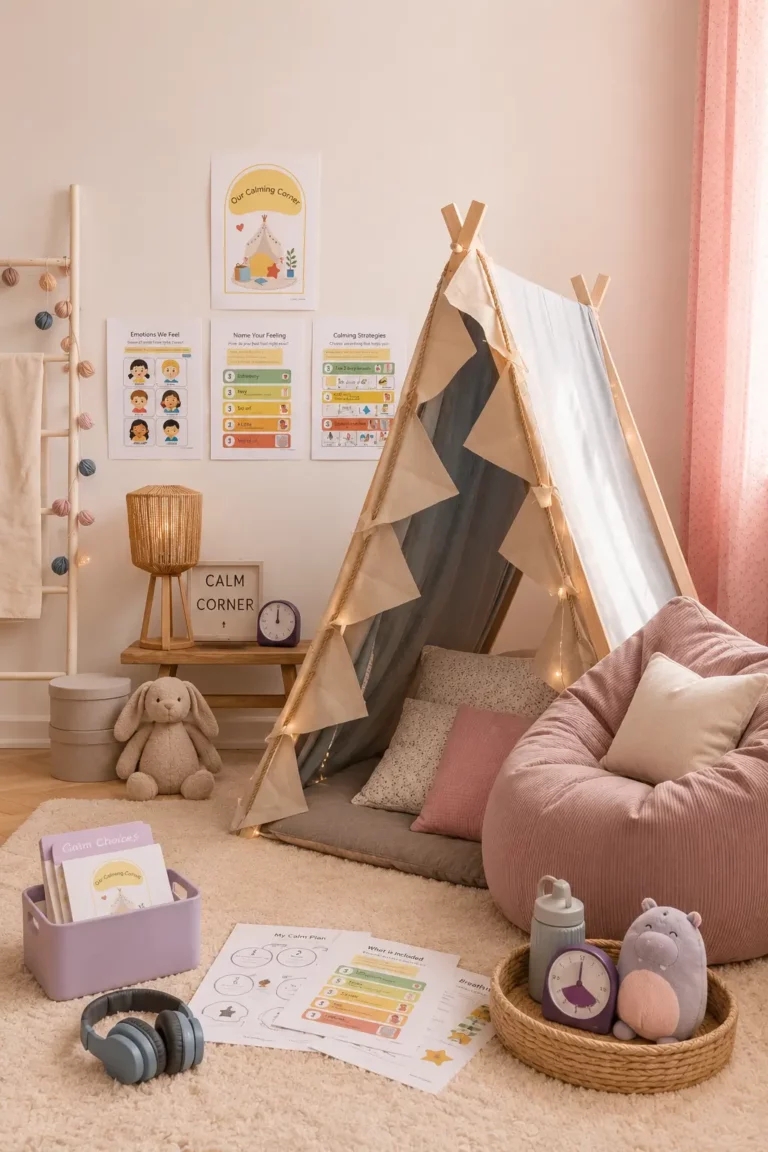
It’s normal (even expected) to have big emotions in the classroom, especially with third culture kids and ESL learners going through changes. If you’re interested in emotion activities for kids, have a look here:
Who Are Third Culture Kids (TCKS) in Expat Families?
Third culture kids (TCKS) are children who grow up in a culture different from their parents’ passport culture. Often because of expat life and international work, or global mobility. They may spend significant parts of their childhood in one or more countries, languages, and school systems that are not considered their “home” country.
In expat families, this experience often starts early and repeats often. Moves can happen every few years, sometimes sooner, and children have to adapt quickly to new environments. Over time, this shapes how they relate to people, places, and themselves. Many third culture kids feel deeply connected to multiple cultures, while also feeling unsure where they fully belong.
Importantly, this isn’t just a childhood experience. Many adults in expat families are themselves adult third culture kids, even if they never had a name for it growing up. That shared history means families often move through transitions together, with parents and children carrying different — but interconnected — experiences of belonging, loss, and change.
This is where the roles of arrivers, stayers, and leavers become especially helpful, because they describe what people are going through right now, not who they are as a person.
What Does It Mean to Be a Third Culture Kid? The Arriver, Stayer, and Leaver Cycle
It’s hard to answer the question “What does it mean to be a third culture kid?” in one post. Or in one book. Or in 10 books. There are so many individual stories and they’re all unique. However, there are shared experiences that can be very helpful to understand. Like the arriver, stayer, and leaver roles Doug Ota so beautifully describes in his book Safe Passage. Let’s explore!
In expat life and international schools, people are constantly moving through a cycle of arriving, staying, and leaving. These aren’t personality types or fixed identities. They’re roles that describe where someone is in the transition process at a particular moment in time.
A child can be an arriver in one school year, turn into a stayer the following years, and eventually become a leaver again. The same is true for parents, teachers, and school staff. What makes this especially challenging is that these roles often overlap within communities. One child may be preparing to leave while another is just beginning to settle in. And a parent may be emotionally ready for the move long before their child is.
Over time, people tend to drift through these roles, and often without realising it. Someone who once felt new slowly becomes a stayer. When this drift isn’t named or understood, it can create confusion, emotional strain, and misunderstandings. Especially when different family members are experiencing different parts of the cycle at the same time.
Understanding the Arriver–Stayer–Leaver cycle helps explain many of the hidden dynamics in third culture kids’ lives. It gives language to what’s happening beneath the surface and creates a clearer foundation for offering the right kind of support at the right time.
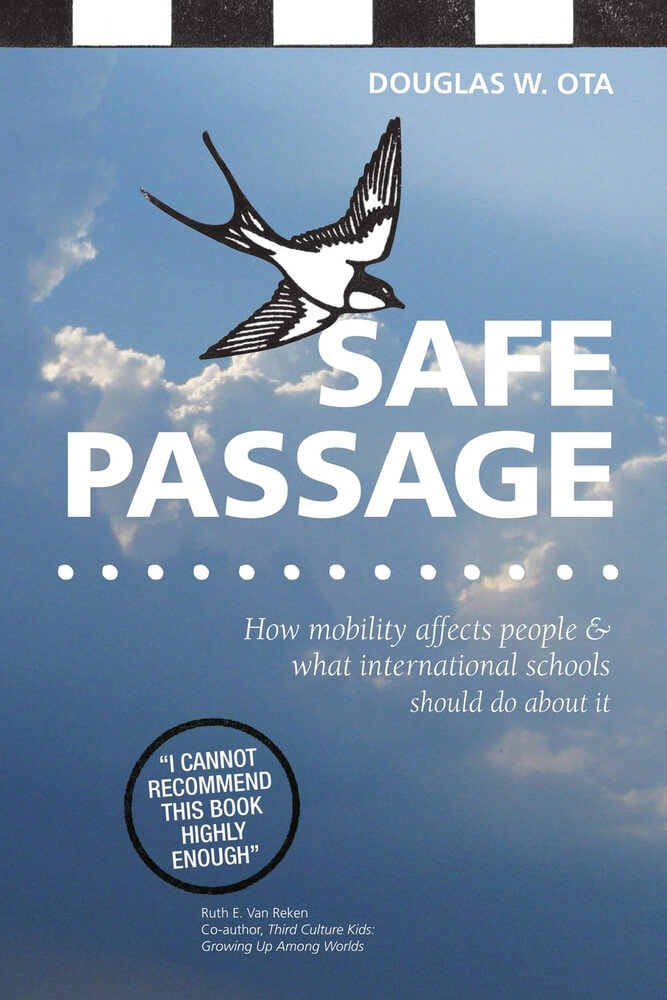
Safe Passage Book
Safe Passage is a must-read for people in international school communities. Through the Laws of Transitions, Doug Ota explains how the cycle of arriving, staying, and leaving affects us and what we can do about it. Widely used in international education and transition care.
Next, we’ll look more closely at what it actually means to be an arriver, stayer, or leaver, and how each role shapes belonging and emotional wellbeing in expat families and international school communities.
Third Culture Kids as Arrivers: What It Really Means to Enter a New Expat Life
For third culture kids, being an arriver is not just about moving to a new country or starting at a new international school. It’s about entering a new world while still emotionally connected to the one they left behind.
Physical arrival happens quickly. Emotional entry does not.
Why Arriving Is More Than Just Moving
Arrivers are still in the transition stage long after the suitcases are unpacked. They are learning how this place works while quietly carrying loss, uncertainty, and the pressure to adapt. This is why arriving often looks smooth on the outside but feels demanding on the inside.
One of the most important — and often overlooked — needs of arrivers is who helps them interpret the new culture. The first people who welcome a family frequently become informal mentors. Their attitudes toward the school, the host culture, and expat life itself strongly shape how children understand their new environment. A supportive, grounded guide can help an arriver feel oriented and safe. A cynical or marginalised guide can unintentionally pass on fear, resentment, or withdrawal.
Arrivers Need Permission to Slow Down
Arrivers also need permission to be slow. In international and expat communities, mobility is normalised. Children are often expected to “bounce back” quickly because they’ve moved before or because everyone else seems to manage. But familiarity with moving does not make it emotionally neutral. Many arrivers cope by observing carefully, holding back, or delaying emotional investment until they know whether this place — and these people — are temporary or not.
Another key need during arrival is space for mixed emotions. Excitement and grief coexist. Arrivers may feel happy about what’s new while deeply missing what was left behind. When loss is minimised or rushed past, children often suppress it — not because it’s gone, but because it feels inconvenient. Over time, unacknowledged losses tend to resurface later, often in unexpected ways.
What about belonging
Finally, arrivers need clarity around belonging. They are constantly scanning the social landscape: How do friendships work here? What’s expected of me? Am I meant to settle in, or stay lightly attached? Without explicit guidance, many third culture kids default to emotional self-protection. This might look like staying pleasant, adaptable, and non-committal rather than deeply connected.
Supporting arrivers well is about recognising that entry is a process, not a moment. And that how children are welcomed, guided, and allowed to feel during this phase shapes how safe the entire expat experience becomes.
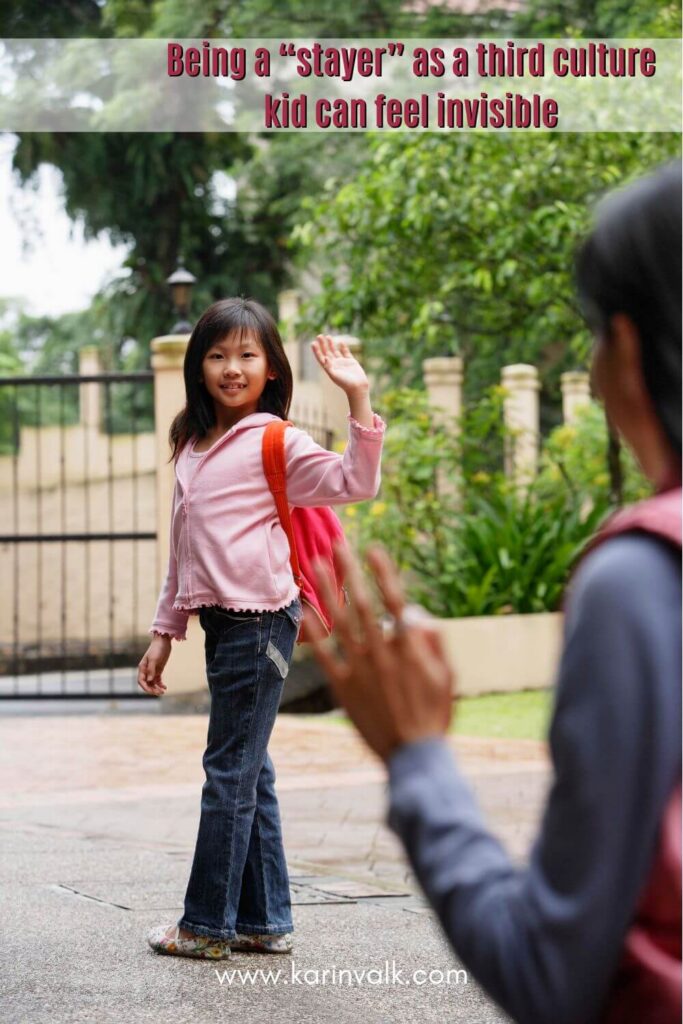
TCKS as Stayers: Belonging, Loss, and Being the One Who Remains
For third culture kids, being a stayer doesn’t mean staying for a short while. Stayers are the children (and adults, like myself) who remain in one place for many years, while people around them continue to arrive and leave. Over time, they become familiar faces in the community, the ones “who know how things work”.
In expat life and international schools, stayers are often expected to be the steady ones. They’re asked to help new arrivals settle in, explain unspoken rules, and reassure others that “it will be fine”. Because they’re not the ones packing boxes, their experience is frequently overlooked. Even though they are repeatedly affected by loss.
Why Stayers Are Often the Most Overlooked
This is where third culture kids belonging becomes especially complex. Each goodbye matters, but when departures happen year after year, losses often go unacknowledged. Stayers learn to absorb change quietly, and many stop investing deeply in relationships as a way to protect themselves. From the outside, they may look confident and settled. On the inside, they may be carrying layers of cumulative grief.
I personally kept asking the same questions to new people without realizing what I was doing. “What brought you here?”, “How long will you be staying?”, “Do you think you’ll ever move back?”. I was vigilant. If any of these answers suggested that they might leave again, a part of me closed off to a deeper friendship to protect myself from the inevitable pain.
When Staying Starts to Feel Invisible
Stayers are also often caught in a contradiction. Because they know the culture so well, people assume they are resilient and unaffected. Yet being the one who remains can be just as destabilising as leaving…sometimes more so. When losses aren’t named, stayers can begin to feel that their pain doesn’t quite count, because nothing “big” is happening to them. They’re staying in the same place after all.
Understanding what it means to be a stayer helps families and schools recognise a more subtle kind of struggle. It reminds us that support for third culture kids isn’t only needed during moves, but also for those who stay — again and again — while their world keeps changing.
If you are in need of inspiration to help your child move through big emotions, check out this post:

Third Culture Kids as Leavers: Preparing for Goodbyes
For third culture kids, becoming a leaver starts long before the actual move. It begins the moment a departure is known or anticipated. Even when dates aren’t fixed, the awareness that “this won’t last” changes how children relate to people, places, and experiences.
In expat families, leavers are often surrounded by mixed messages. There may be excitement about what’s next and reassurance that new opportunities await. Perhaps even pressure to stay positive. At the same time, children are already beginning to detach. Sometimes emotionally pulling back before anyone notices. This is not avoidance; it’s a protective response.
Leavers frequently have to say goodbye without being taught how. When goodbyes are rushed, minimised, or even avoided, third culture kids may cope by keeping relationships light. Over time, this can shape how safe closeness feels. Not just during moves, but later in life as well.
For third culture kids belonging is often tied to questions of permanence. Is it worth investing if I’m leaving soon? Will this connection matter later? Without support, leavers may leave parts of themselves behind along with the place they’re departing.
Supporting leavers well means making space for both anticipation and loss. It means recognising that leaving is not just a logistical process, but an emotional one. And that saying “a good goodbye” is necessary to be an emotionally healthy third culture kid.
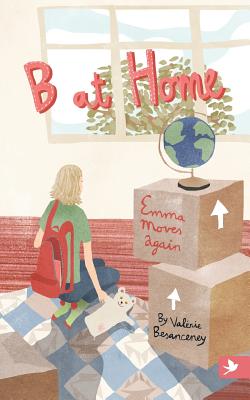
B at Home: Emma Moves Again
Many international families and schools use this great book to help children talk about transitions. Reading it together gives children language for emotions they don’t yet know how to express, and it opens the door to meaningful conversations around leaving and arriving. Includes practical ideas for support.
If you’re looking for more thoughtfully chosen books like this, you might also like my post on social emotional learning books for international schools.
Third Culture Kids Support: Using RAFT to Navigate Arriving, Staying, and Leaving
Supporting third culture kids through global mobility is both complex and surprisingly simple. Complex, because every family, child, and context is different. Simple, because beneath all the tools and programs, the goal is the same: helping people feel seen, heard, valued, and emotionally safe while things change.
Unfortunately, there isn’t a quick fix. Entire professional fields, transition programs, and international school communities around the world are devoted to this work. And for good reason! Global mobility touches identity, attachment, learning, and emotional safety in ways that can’t be “solved” with a few well-meaning steps.
What CAN help is finding shared tools and language that make the invisible visible, and that give families and schools a structure to return to.
The thing no one likes to talk about: Grief
Internationally mobile families often experience an accumulation of grief; not just one big loss, but many smaller goodbyes over time. Without an outlet, that grief doesn’t disappear; it gets carried forward. That’s why having a familiar framework you can return to matters.
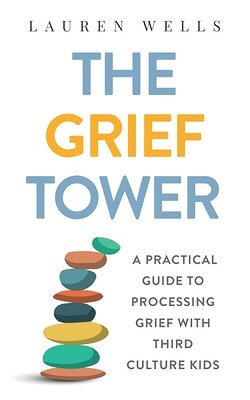
The Grief Tower Book
A hope-filled book that helps understand how many small, unprocessed losses can stack up over time. It offers a powerful way to make sense of the TCK experience and process the goodbyes and losses that come with it. For adult TCKs too.
One of the most widely used and practical approaches in international education comes from Third Culture Kids: Growing Up Among Worlds by Ruth Van Reken and David Pollock: RAFT. It doesn’t promise to make transitions easy. It offers a structured way to leave well, so arriving doesn’t feel quite so heavy.
RAFT stands for:
- Reconciliation
- Affirmation
- Farewell
- Thinking Destination
And each part can be adapted for arrivers, stayers, and leavers.
Reconciliation: Naming What Needs to Be Repaired or Accepted
Reconciliation starts with acknowledging reality. This might mean coming to terms with the fact that a move is happening, or addressing unresolved tension with people who matter.
For leavers, this could look like:
- repairing a strained friendship or teacher relationship
- naming disappointments that weren’t said out loud before
- asking, “If we ever came back here, what would I wish I had said or done?”
For stayers, reconciliation might be different:
- recognising resentment or sadness about others leaving
- allowing space to grieve relationships that ended without closure
This step isn’t about fixing everything. It’s about reducing what gets carried forward unnecessarily. We don’t want situations to haunt us in new chapters of our lives!
Affirmation: Letting People Know They Mattered
Affirmation is about naming gratitude, out loud. This can be simple and powerful:
- children writing short notes to teachers, coaches, or friends
- baking something together and delivering it with a thank-you message
- older children creating a photo reel or message for friends
- revisiting favourite places and saying, “This mattered to us”.
For third culture kids, affirmation reinforces an important message: relationships are worth investing in, even when they don’t last forever.
Stayers benefit here, too. Being affirmed for their presence and continuity helps counter the invisibility that often comes with staying.
Farewell: Making Space for Real Goodbyes
Farewells are often the hardest part — and the most avoided. When goodbyes are rushed or skipped, children may arrive in the next place still emotionally “unfinished”.
Helpful farewell practices include:
- taking one-on-one walks where children can talk freely
- creating a small, named box where children choose what to take to the next place
- sharing memories together in different rooms of the house
- recording messages, photos, or short videos to keep
Farewells done intentionally make a huge difference in the amount of grief and loss that we carry with us throughout our lives.
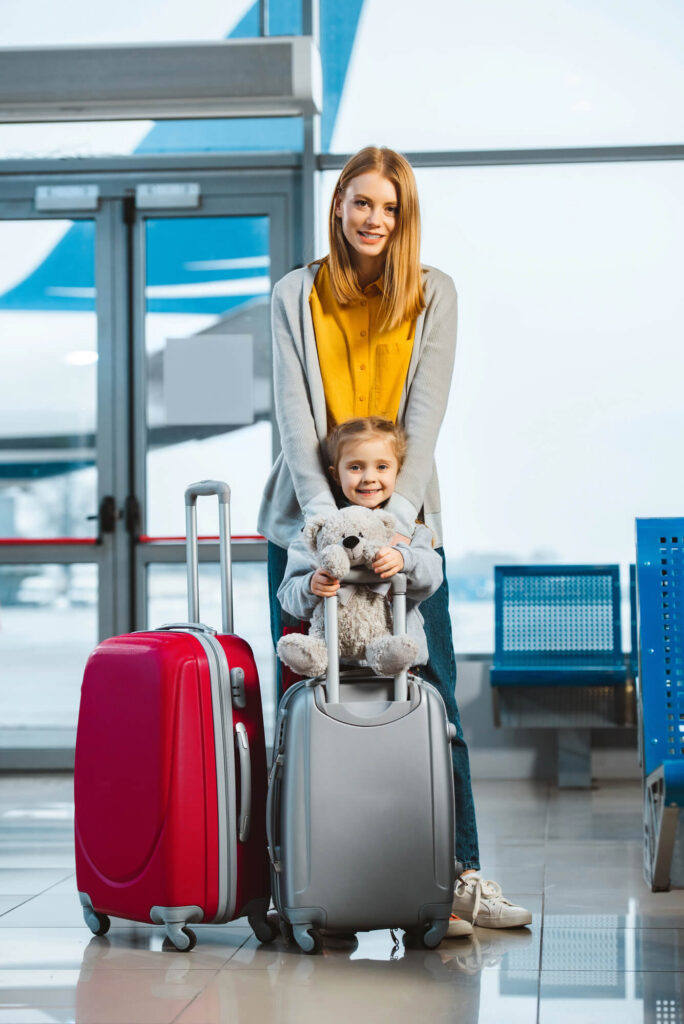
In need of ideas to support your child during airplane travel? You’ll appreciate this post to help create an airplane activity kit:
Thinking Destination: Preparing Without Rushing Ahead
Thinking destination helps bridge the gap between leaving and arriving.
This can include:
- talking about what will be the same and what will be different
- planning a bedroom together or choosing something new for it
- reaching out to the new school and asking how support works there
- identifying trusted adults or emergency contacts in advance
And, as a language teacher, my favorite:
- learning important sentences in the new language to create safety for your child in school or out on the street (for example: how to ask to go to the bathroom, ask for help, etc.) This also helps them see the language as something they can eventually learn, so it feels less overwhelming and scary.
A helpful dinner-table prompt many families use is:
“What will stay the same, even though we’re moving?”
This allows children to hold excitement and sadness at the same time. And it’s powerful to share experiences so that everyone feels they’re not alone in this.
raft for stayers
For stayers, RAFT is just as important, though it’s talked about far less. Stayers also need reconciliation and affirmation. They also experience farewells, often repeatedly. And they, too, benefit from naming what each departure has meant, instead of absorbing loss silently while being expected to remain “fine”.
Thinking destination for stayers looks different. It might sound more like: “What and who do I have here that helps me through tough times?” or “What makes me happy or excited that I can look forward to?”. Rather than preparing for a new place, stayers often need help reconnecting to their current place in a meaningful and supportive way.
It’s important to say this clearly: RAFT is not a checklist that solves transition. Supporting third culture kids is long-term, relational work, and schools and families around the world are constantly refining how they do it.
What RAFT offers is something very valuable: a shared language, a repeatable structure. And sometimes, that’s exactly what makes leaving (and staying, and arriving) feel doable.
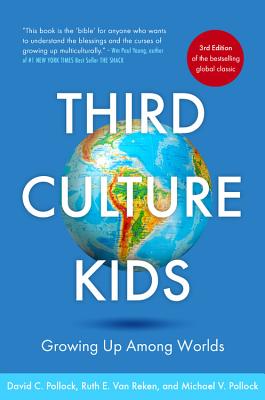
Third Culture Kids Book
Third Culture Kids: Growing Up Among Worlds is a widely recommended book for parents and educators working with globally mobile children. It offers practical language and frameworks, including RAFT, to better understand transitions, identity, belonging, and accumulated loss in expat life.
Final Thoughts on Third Culture Kids
Growing up in expat life means that third culture kids are constantly navigating arrival, staying, and leaving. Often, the words for what that does inside are barely there, if at all.
Understanding the Arriver–Stayer–Leaver cycle helps make sense of behaviours that can otherwise feel confusing or personal. It also reminds us that support looks different depending on where someone is in the transition process.
Whether you’re a parent, educator, or adult who grew up this way yourself, even small acts can make a real difference. Think of creating awareness, building a shared language for the TCK experience, and genuine acts of care. Starting with one thoughtful step is often enough to help children (and adults) feel seen, heard, and supported as they move through change.
Want to know more about the third culture kid experience? Find the best books for expats here: