
Calm corners are becoming more popular, and with good reason. Whether you’re a parent dealing with after-school meltdowns or a teacher supporting a dysregulated student, a calm down corner can be incredibly effective in helping kids regulate their emotions. Having a place to go teaches them confidence and agency. What you put in it matters, so this post shares 12 calm corner essentials so you can build the space quickly, and with ease.
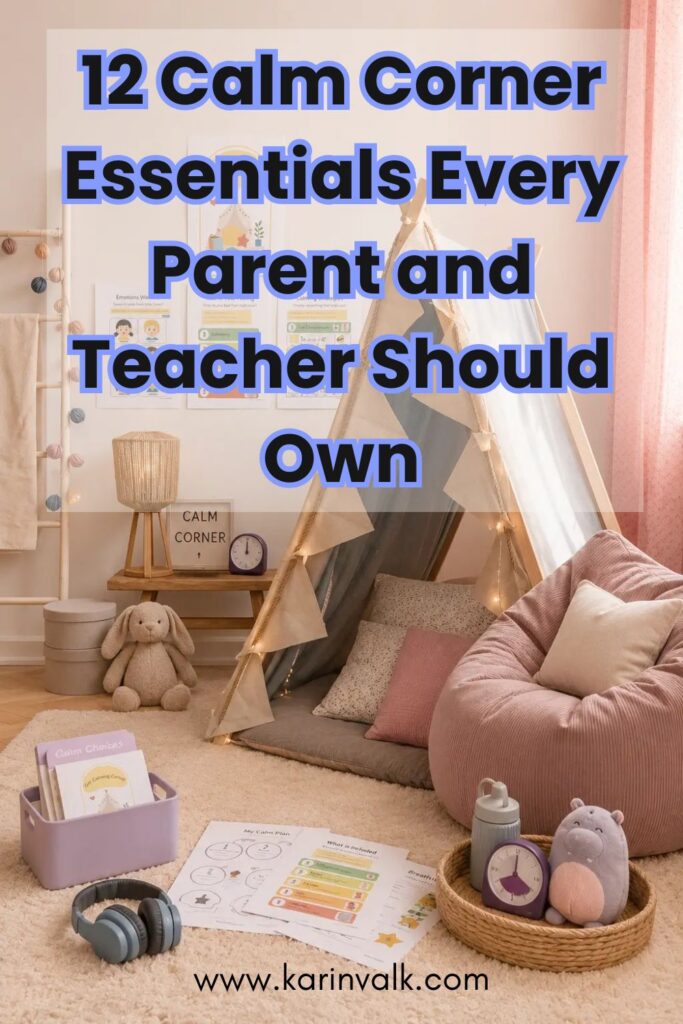
This list was put together with both home and classroom in mind. Whether you’re creating a calming space at home or carving out a calm corner in the classroom, the essentials are very similar.
As a parent and a teacher in international schools, and embodiment coach, I’ve seen firsthand what helps children regulate. Especially in multilingual settings where kids may not yet have the words for big feelings in the language around them. The items here work across ages and languages.
You’ll also find:
- Calm corner printables and calm corner posters easily accessible due to visuals
- A calm corner sign and calm corner tent to define the space
- A calm down kit with sensory tools and a visual timer
- Noise cancelling headphones for kids who are easily overwhelmed by sound
- A breathing buddy for kids and feelings books for kids
This post is all about calm corner essentials
Why Every Classroom and Home Needs a Calm Down Corner
A calm down corner is a designated space where a child can go when big emotions feel too big. Whether it’s a calm corner at home or one tucked into your classroom, the idea is the same: a place with the right self-regulation tools to help them find their way back to calm on their own. Not a timeout spot. Not a punishment.
Research in recent years consistently shows that children who have access to a calm corner handle difficult moments and transitions better. And negative behaviours in the classroom decrease when the space is used well.
You might also know it as a peace corner, a calming space, or a cosy corner. The name is not as important as what’s in it, and that’s what this list is for.
Worth noting for international school teachers and parents in multilingual environments: research also shows that children navigating two languages face extra challenges with emotional regulation when they don’t yet feel confident in either. Visual and physical tools aren’t a nice-to-have in those settings. They’re essential. Every item on this list was chosen with that in mind.
Calm Corner Printables
Good calm corner printables give a child a framework for what to actually DO once they get there. Calm down corner printables that use images and colour-coding rather than text work for children at any reading level, in any language.
For EAL learners and children in multilingual households, visual supports for emotional regulation like these are the difference between a calm corner that functions and one that just looks nice.
1. Calm Down Corner Printables Kit

The Calm Down Corner Printables Kit is the one item on this list I can speak to from personal experience on all sides: as the teacher who needed it, the parent who would have wanted it (I’ve got teenagers now), and the embodiment coach who built it.
It’s 20 pages covering breathing, body awareness, feelings, calming strategies, reflection, and more. All with visual-first design, so children who don’t yet read English fluently, children with dyslexia, and EAL learners can use it independently once it’s been modelled. No text-heavy posters that need adult guidance at all times.
What makes it different from generic sets is where it starts: the body. Rather than asking a dysregulated child to jump straight to naming their feelings (hard for anyone mid-meltdown), it opens with body sensation first. That sequence is what turns a collection of tools into something that builds lasting self-regulation skills over time.
It covers ages 4–12, works for home and classroom, comes in both A4 and US Letter, and the whole space can be up and running in an afternoon.
Calm Corner Posters
When a child is overwhelmed, reading a list of instructions is just not happening. Calm corner posters solve that. A quick glance tells them what to try next, no reading required.
What visual tools help kids regulate emotions without needing to read? That’s exactly the right question if you work with visual learners and EAL students, or any child who isn’t yet confident with reading. Whether it’s a calm corner classroom or a calm corner at home, a good set of posters does more than a wall of only words ever could.
2. Hadley Designs Calming Corner Posters

These calming corner posters are proper wall posters: 11×17 inches, laminated, thick cardstock, and available in over a dozen aesthetic styles from boho to retro to farmhouse. Yes, you can match your classroom vibe! The set of nine covers feelings charts, coping strategies, and breathing techniques, all on laminated cardstock that survives classroom life with more dignity than most things do.
One thing worth knowing: the content is fairly word-heavy. The 5-4-3-2-1 grounding poster, for example, runs mostly on text. That makes this set a better fit for native English speakers and confident readers. For EAL learners, multilingual classroom settings, or kids with dyslexia, you’ll want something built on visuals first; which is exactly what the printable bundle in section one covers. Choose what fits your class best.
Calm Corner Sign
A calm corner sign might seem small or unimportant, but it can actually be surprisingly powerful: it makes the space official. Kids — especially younger ones — respond differently to a corner that has a name on it. It tells them clearly: this is the place for big feelings.
Some schools call it a peace corner, which is essentially the same thing. Whether it’s a calm corner at home or a calm corner classroom, a sign communicates that this space was put here intentionally, by an adult who thought about it. That does have a positive influence.
3. Wooden Calm Corner Sign
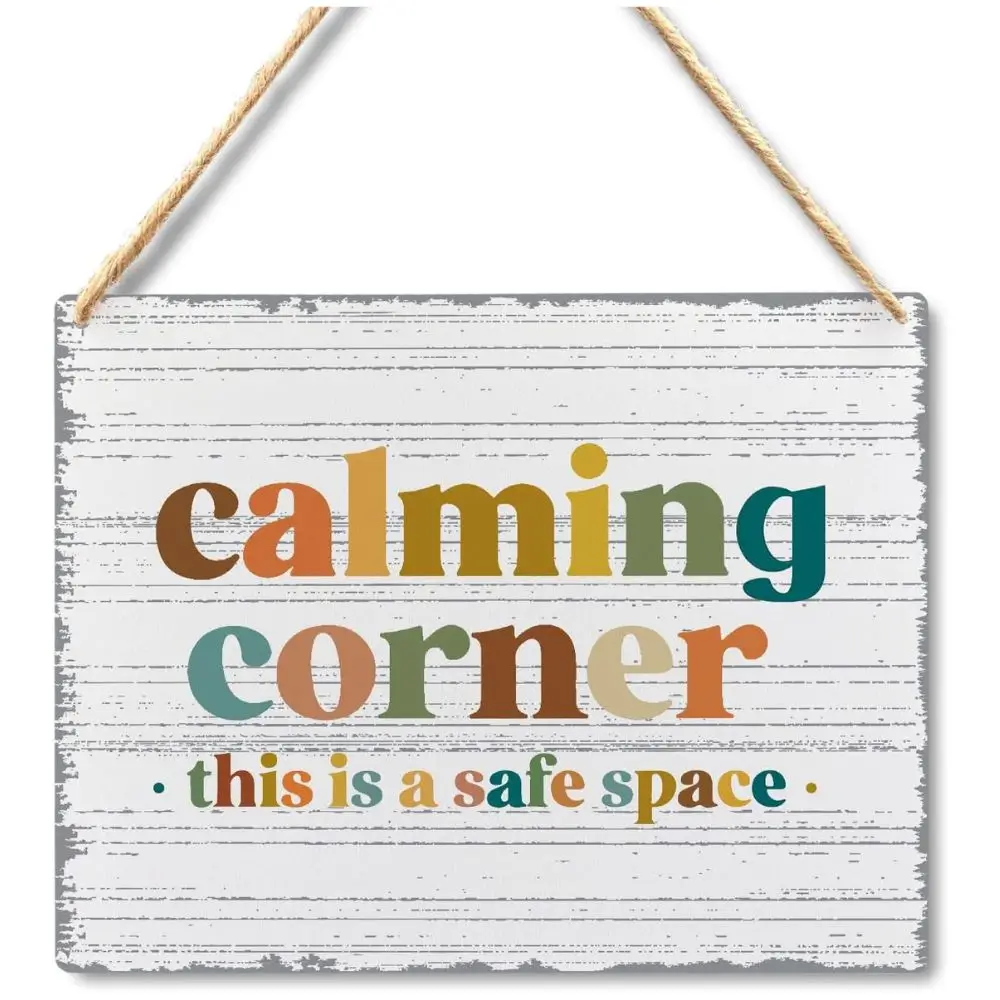
At around $8, this isn’t going to win any furniture awards, and it doesn’t need to. A calm corner sign has one job: to tell a child that this spot means something. This one does that, simple and straightforward. It comes in a range of colors and shapes, hangs on jute rope, and arrives ready for the wall.
Some reviewers called it small. It’s 10×8 inches. For labelling a calm corner for kids, whether in a calm corner preschool classroom or at home, it might just be exactly the right size for a sign.
A calm corner isn’t complete without a good weighted lap pad. Luckily I’ve saved you a lot of time and listed the best I could find! Check them out here:
Related post: 8 Best Weighted Lap Pads to Tackle Anxiety
Calm Down Kit
When the after-school meltdowns hit, when a child is overstimulated and heading into tantrums, telling them to calm down does approximately nothing. A calm down kit gives them self-regulation tools they can reach for on their own. Think: timers, fidgets, sensory tools, and strategy cards. They can also be great ADHD tools for kids.
For a dysregulated child or a sensory sensitive child, having a physical kit within reach makes a real difference. Whether it’s a toddler calm down corner at home, a space for older primary school kids, or a full classroom setup, the products below cover all the bases.
4. Carson Dellosa Calm Down Kit

This is the grab-and-go version: a small spin wheel, two fidget toys, six double-sided strategy cards, and a portable carrying case. At around $5, it’s easy to keep multiples. Handy for neurodivergent kids who do better with their own set rather than sharing.
The fidgets work well for sensory seeking kids and children with anxiety who need something in their hands to focus. The strategy cards are small (index card-sized), but for a child who already knows the options, a quick visual prompt is enough. And they look cute!
5. Visual Timer for Kids: Time Timer MOD

“Five more minutes” means nothing to a five-year-old. Truly nothing. The Time Timer MOD is a huge help. A red disk shrinks as time passes. Very visual, kids understand it immediately, no explanation needed. Silent by default, no ticking, no unexpected buzzer mid-meltdown. (There is an optional end alert if you want it. Some kids find the structure helpful. Some really do not).
Time blindness is more common than people realize. It’s especially common in ADHD. I’ve got it, and me and my ADHD brain thank this timer every day! (I’ve got the green one and a matching color planner and pen. I still love the sight of it each time I take them out. Simple pleasures in life, lol).
The silent option is great for kids with anxiety, and for every highly sensitive child who goes into sensory overload from a surprise sound. As far as emotional regulation tools for kids go, this one is practical and useful in a variety of contexts. It is Calm Tech Certified, meaning it was designed to reduce cognitive load.
Place it in your calm corner, or use it as part of calm down tools for kids who need a visual time limit. No “but how much longer.” No buzzer drama.
if you want to compare the time timer MOD with the other great visual timers out there — for ADHD, autism, the classroom, homework, etc. — I rounded up my twelve favourites:
6. Calm Corner Sensory Tools: Mindful Maze & Sensory Bottles
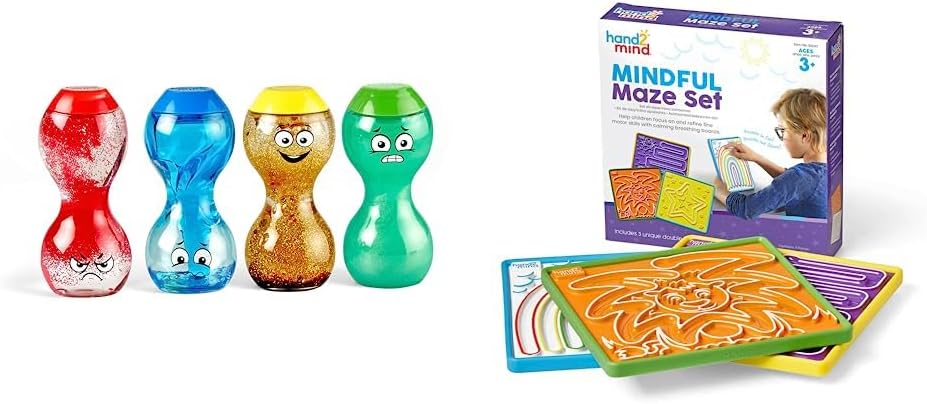
These two work great together, which is why hand2mind sells them as a bundle. The Mindful Maze Boards are wooden double-sided boards. Your child traces a path with their finger while breathing to match the pace of the maze. No reading needed. Using their hands and breath, while focusing on something concrete can be incredibly powerful in calming them down.
If anger issues in children or emotional outbursts are a regular occurence in your home or classroom, “use your hands” is often a helpful redirect.
The Sensory Bottles are sealed glitter bottles, each one linked to a different emotion. Your child picks the one that matches how they feel, shakes it, and watches the glitter – that represents their state – settle. (There is something deeply satisfying about watching chaos settle. Kids get it intuitively. Adults are not immune either). They work beautifully as a calm down glitter bottle without the DIY mess, and they are a natural fit as calm corner activities for preschool through elementary.
Together, the maze and the bottles cover at least two bases: tactile input and emotional naming. Both products can be used independently, which means they support co-regulation. You (or another calm adult or classmate) can do one, while the upset child can do the other one close by, so they feel that they’re not in it alone. Calm corner usage at its best!
Calm Corner Tent & Bean Bag Chair for Kids
A calm corner tent takes the designated spot and turns it into a whole vibe. For many kids — especially toddlers and preschoolers — having walls around them is what makes the calm corner for kids concept click.
Some kids need the visual cutoff. Some just like having a cozy place that is clearly theirs. Below you’ll find options for both the toddler calm down corner and the calm corner preschool crowd, at very different price points. Although, it’s perfectly suitable for older kids, since even I would love a tent or a giant pouffe and I’m supposedly an adult 🙂
7. Tiny Land Teepee Tent with Mat

4.7 stars and over 2,600 reviews on Amazon. For a kids’ tent. That’s saying something. The padded mat comes with it, the star lights come with it, and it goes up without a degree in pole assembly. For young kids, an actual enclosed space is often what makes it feel real and comforting to them — as opposed to just a chair in the corner with a poster.
Works well for calm corner kindergarten setups, or even for older kids. Could also work as a cute reading nook. Less realistic for classrooms where space is tight, but at home it’s hard to beat.
8. Bean Bag Chair for Kids

A bean bag does something a regular chair doesn’t: it molds around you. For a child who needs a physical signal that they’ve arrived somewhere safe, this is great. It’s like a comfy hug! The slipcover is machine washable and the canvas is stain-resistant. Super useful whether this lives at home or in a calm corner classroom.
Multiple sizes too: small for toddlers and preschoolers, large for older kids or the parent who “just wants to sit for a minute” (we know how that goes…or at least I do).
It arrives a bit firm and breaks in with use.
Noise Cancelling Headphones for Kids
If your child covers their ears in the supermarket or completely loses it when a classroom gets loud, noise cancelling headphones for kids are one of the most practical items on this list. Sound is often the first thing to tip a child over the edge.
Even in a calm corner at home, background noise can undo everything else you set up. These headphones give them a way to control their auditory world without anyone needing to turn down all sound in the room. I know I swear by mine.
9. Alpine Muffy Headphones
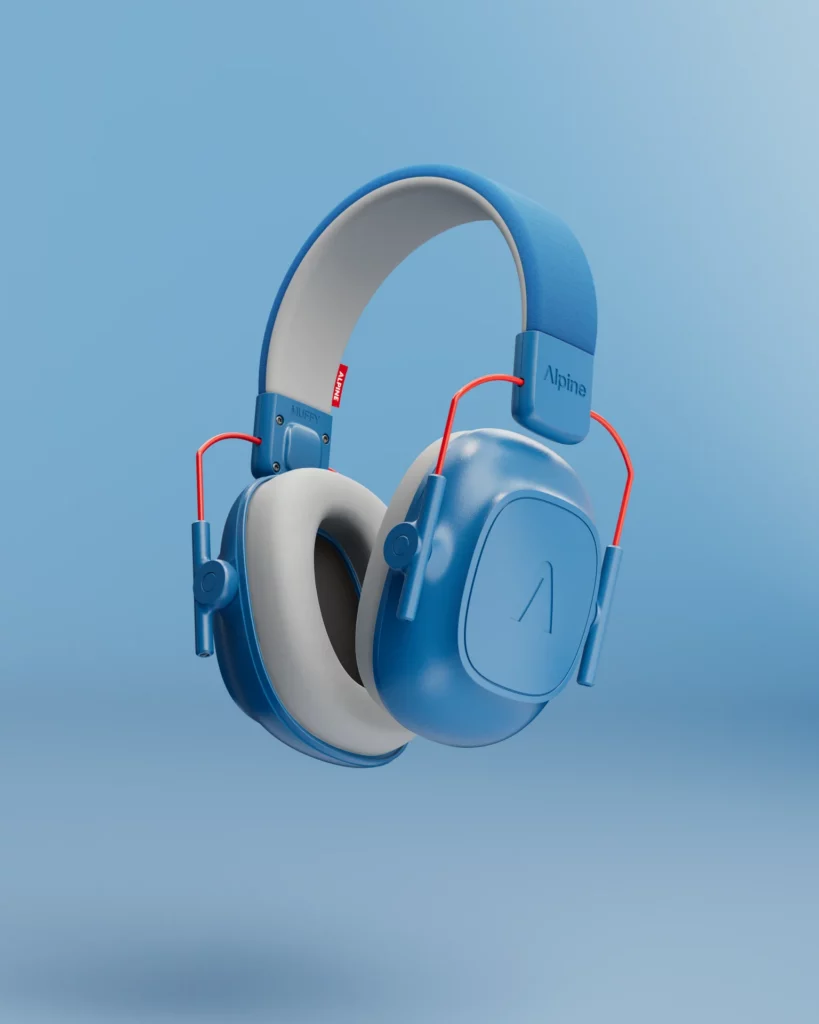
These are actual hearing protection: CE and ANSI certified, 25dB sound reduction. So, not just padded headphones that look the part. They adjust to fit ages 5 to 16, so you won’t be replacing them every year.
For a child who struggles with noise, putting these on is often enough to bring the volume of the world down to a manageable level. Kids want to wear them. Parents of children with sensory sensitivities, including autism, report their kids ask for them. Great addition to a calm corner!
Breathing Buddy for Kids
A breathing buddy for kids is exactly what it sounds like: something soft to place on their belly while they breathe, so kids can watch it rise and fall. It’s one of the easiest calm corner activities to start with. Works in any calm corner for kids, from a calm corner preschool setup to a corner at home. And even if not used for belly breathing…who doesn’t like cuddles?
For the full guide to breathing techniques kids actually enjoy, head to the breathing exercises for kids post.
Related post: Fun Breathing Exercises for Kids: A Beginners Guide
10. Warmies Weighted Stuffed Animal

Heatable, lavender-scented, and weighted, these stuffed animals do a lot for a dysregulated child. The weight provides proprioceptive input, which signals the nervous system to calm. Deep pressure activates the parasympathetic system, lowering cortisol and raising serotonin. The relaxing lavender and warmth do the rest.
They come in every animal imaginable, so kids get to choose one they actually love. I must warn you tho, my kids have a husky dog and a rhino, and my partner a mammoth, and all of them got attached quickly and found me brutal for wanting to microwave their heatable furry friends (yes, truly, even my grown man of a partner). So you might need a neutral cherry pit bag for warmth, lol.
One note: for the actual belly breathing exercise, a lighter regular stuffy works better, because you can see the belly rise and fall more clearly. But as a calm corner essential they are a fantastic addition.
Cards and Feelings Books for Kids
The cards and feelings books for kids in this section do something the rest of your calm corner can’t in such detail: they give emotions a name. A child who can point to “frustrated” or “scared” is already one step ahead of the meltdown. Naming big feelings is one of the most effective emotional regulation tools you can give them.
These resources work in a calm corner classroom or at home, and equally well in a peace corner, whatever you call the space. For a great list of social emotional learning books, see this SEL books for kids post.
11. Feelings Cards for Kids
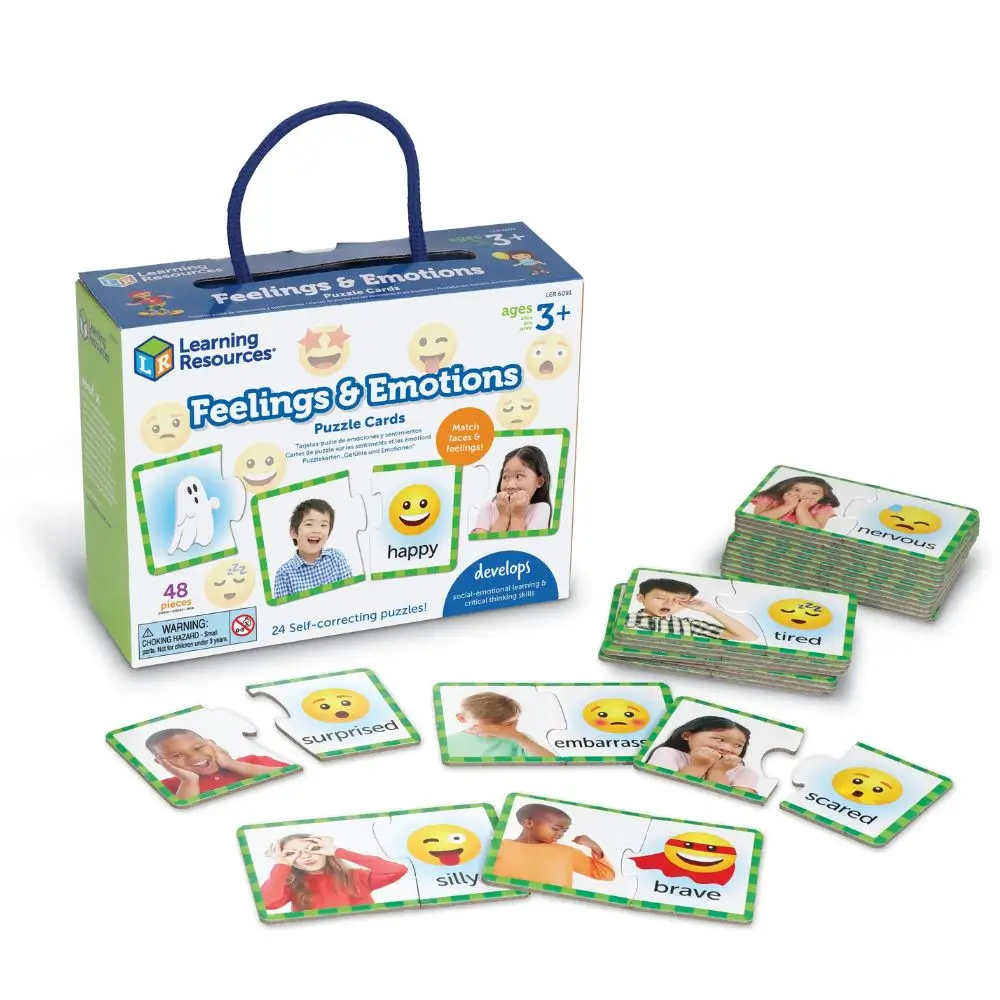
These feelings cards for kids are great for multiple reasons. Research on autism and emotion recognition keep showing the same thing: real photos of real kids work better than cartoon illustrations, because they transfer to actual social interactions.
These 24 puzzle cards do exactly that: pairing emotion words with photographs of real children showing those feelings. Widely used in speech therapy and recommended for children with autism and ADHD.
The self-correcting design means only one puzzle piece matches each face, no multiple options possible per emotion. No long texts reading required either, which makes them just as useful for multilingual kids and EAL learners.
12. The Color Monster by Anna Llenas
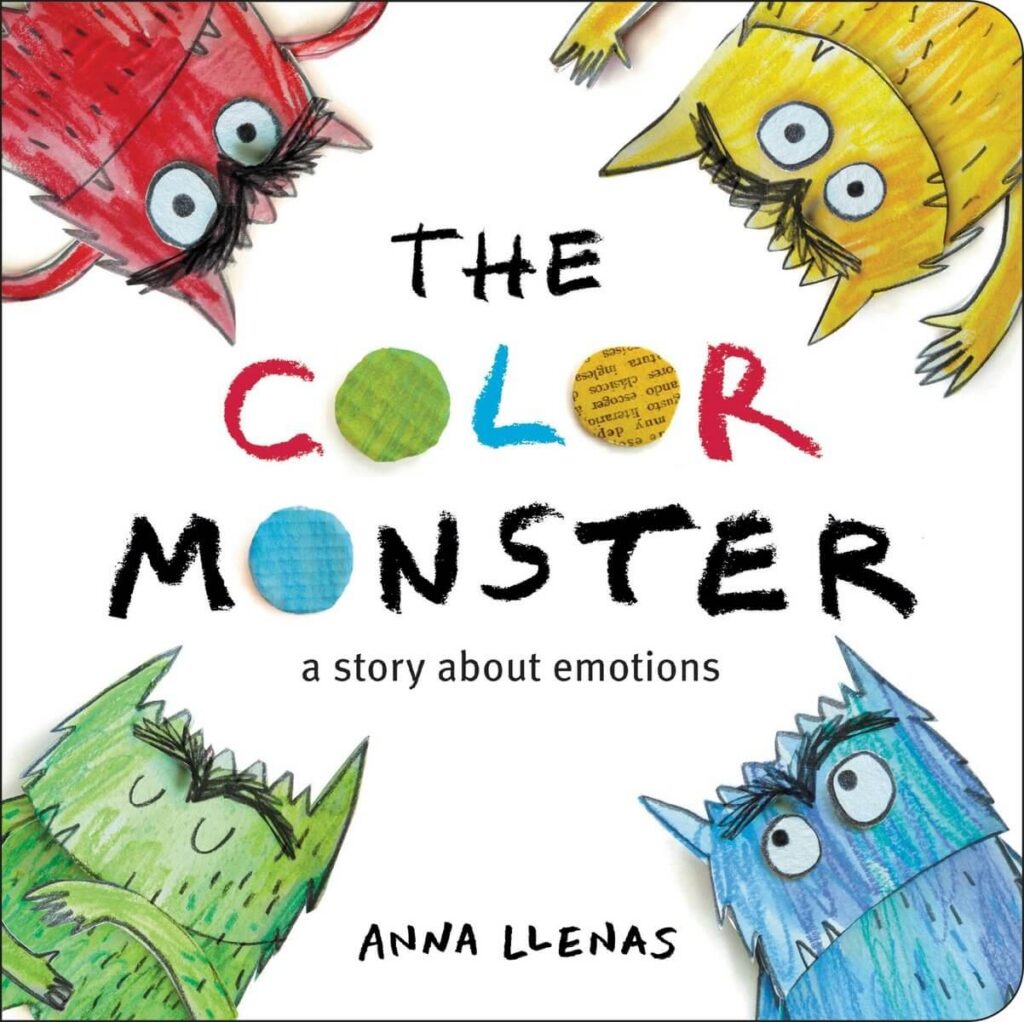
The Color Monster sorts big, tangled feelings into colors. One color per emotion, one concept per page, which makes it easy to follow along. A three-year-old and a ten-year-old can sit with the same book and each take something away. I’ve seen this book used so much in multiple classrooms until the spine gave out.
It sometimes even becomes classroom shorthand: “which color are you feeling right now?” is a real question kids start asking each other. Winning!
The Calm Down Corner Shortlist
You don’t need all twelve essentials if that doesn’t feel right for your situation. If you’re starting from scratch — whether that’s a calming space for an older child, or a toddler calm down corner at home or a calm corner kindergarten setup in your classroom — pick one sensory tool and one emotion tool and see what your child gravitates toward. Watch, adjust, add.
A diy calm down corner doesn’t have to mean hours of prep. It could even be very easy and quick. The calm corner printables kit covers emotion regulation tools and more, a bean bag and a pair of headphones handle the sensory side and comfort. A stuffy they can hug. Done.
Most of the calm down tools for kids and calm corner resources in this list can be ordered and set up in an afternoon. Mix and match and adjust to your kids!
Call it a peace corner, a cozy corner, or anything else…the name is beside the point. Your child needs a calming space that belongs to them. Going there is a choice, not a consequence. That’s when self-regulation tools work best.
For setup ideas and calming corner inspiration, head to the calming corner ideas post.
Got the essentials sorted? The next step is knowing what to do with them. This complete user guide covers how to use a calm down corner day to day, with word-for-word scripts for before, during, and after a meltdown.
Related post: Practical Calm Down Corner Tips: The Complete User Guide
FAQ About Calm Corner Use
Set up a calm corner, or calm down corner, and introduce it before the next meltdown, not during one. What you’re seeing is emotional exhaustion: many children hold it together all day and fall apart the moment they’re home and safe.
Home isn’t the problem; it’s where they finally feel secure enough to release it. A predictable decompression space with sensory tools ready to go gives them somewhere to land. Over time, meltdowns become shorter, and eventually the child starts going there before the explosion. The 12 essentials in this post are a complete starter kit.
First, reduce input: quiet, dim, enclosed and comforting space. Don’t try to talk them through it. A dysregulated child’s brain isn’t processing language well in that moment. What works is co-regulation: you being calm and close, without demanding anything.
Sensory tools help to calm the body and mind. A calming space with these items already in it means you’re not scrambling mid-crisis (also practice using them before). The nervous system reset happens through the body first, you can use more words later. The sensory tools that make the biggest difference are the ones listed in this post. And listen to and observe what your child needs. Sometimes it’s a loving hug, sometimes it’s definitely no touch. You’ll find your way together.
Set up a calm corner classroom space and teach your student to use it when they’re calm, not mid-outburst. Anger outbursts are almost always dysregulation, not defiance, and it’s important to remember that so you can stay calm. The child doesn’t have the skills yet, it’s an inability to regulate not unwillingness.
A calm corner gives them a proactive tool: a visual timer, noise-cancelling headphones, feelings cards, and something soft to hold. The learning happens in the quiet moments when they feel calm and safe again, not during the explosive ones. Once the space is familiar, children start going there before they reach the explosion point. Everything you need to stock it is in this list.
Give them frequent, predictable self-regulation breaks and a calm corner they can count on. Highly sensitive children feel more intensely. Their nervous systems take in more, process more, and need more regulation support. Emotion vocabulary tools, e.g. feelings cards and books like The Color Monster — help them name what they’re experiencing, which research shows reduces emotional intensity. The more consistent the space, the more effectively they can use it. All 12 items in this post work well for highly sensitive children.
Not in the moment. No tool works during a full meltdown. But over time, children start to regulate earlier, which happens when they build emotional vocabulary and learn to check in with their body. That’s exactly what the calm corner printable kit is designed for: the reflection page helps children identify what they’re feeling and what helped, while the individual calm down plan gives them a personal roadmap to return to. The more they use it, the sooner they start catching themselves before they’re fully dysregulated. Most parents and teachers notice a difference within a few weeks — the calm corner printables and sensory tools above are exactly where to start.




One Comment