Is your child always spinning, climbing, unable to sit still, or a little clumsy? These 10 proven vestibular input activities for kids help them calm down and focus. At home and at school!
I earn commissions when you shop through the links below at no additional cost to you. As an Amazon Associate I earn from qualifying purchases.
I sometimes include Amazon links because I know ease and accessibility matter—especially for busy parents and teachers—but I’m also working on adding more options from smaller or values-aligned businesses. I’ll keep updating this post as those become available.
Some kids can’t sit still for a minute, while others freeze at the top of the slide and won’t go near the swings. Often, part of the story is vestibular input. My embodiment coaching is all movement-based, and doing a Sensory Profile myself gave me real clarity on how I process sensory input.
That’s why I’m giving you 10 activities for vestibular input that you can use at home and at school.
You are going to learn about how vestibular sensory input can calm kids down or energize them, easy vestibular activities kids love, ideas for toddlers and preschoolers, activities for the classroom, the vestibular input meaning, the signs of vestibular seeking (and avoiding) and more.
After learning about these vestibular input activities, you will know which ones calm your child down and which ones wake them up. You’ll also know how to tell when it’s enough… and hopefully you’ll see a calmer, more focused kid!
This post is all about vestibular input for kids and simple activities that help them calm down and focus.
Vestibular Input for Kids: Calming or Alerting?
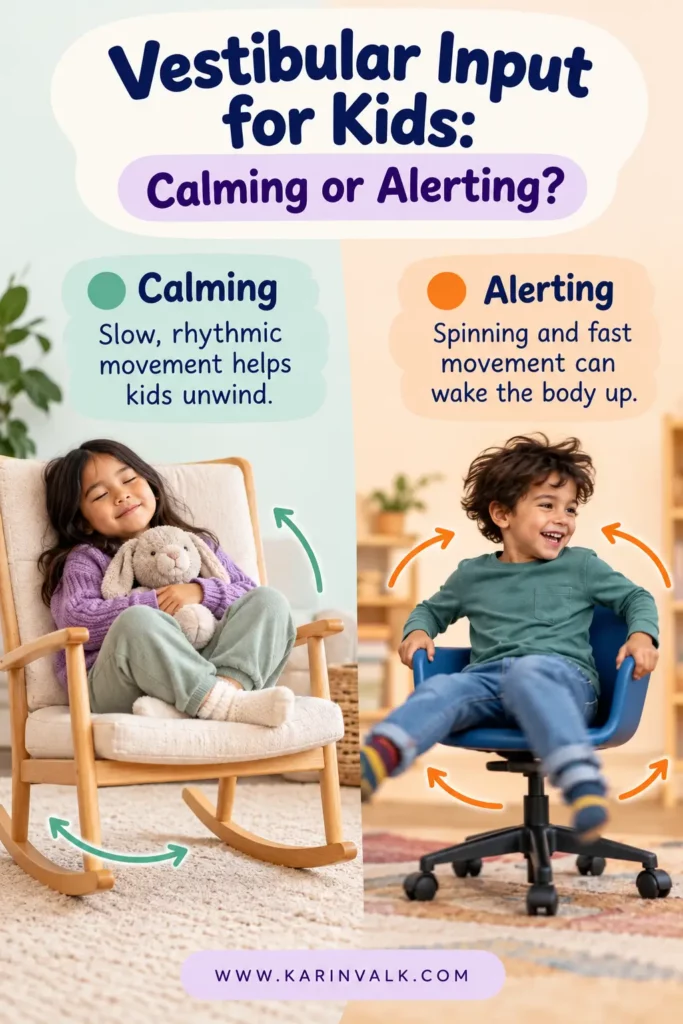
Before you start, it helps to know that vestibular input for kids can calm a child down or wake them up. It all depends on how they move, and that’s the key to using vestibular sensory input well. So, what are calming vs alerting vestibular activities?
Picture a child curled up in a rocking chair. Now picture the same child on a swivel chair! The two types of vestibular input feel very different in the body. Slow, rhythmic movement like rocking or swinging back and forth often helps kids unwind. Spinning and other fast vestibular stimulation activities, on the other hand, wind them right up (as anyone who has ever left a kid alone with a swivel chair knows).
Why is vestibular input calming? It’s all in the rhythm: the slower and more even the movement, the easier it is for the body to relax. That’s why I’ve marked each activity below with 🟢 for calming or 🟠 for alerting, so you can pick the right one for the moment.
In my embodiment work, I use the same two directions all the time: bringing energy down or waking the body up. After all, the goal is a regulated nervous system… awake enough to learn, relaxed enough to listen. That makes the activities below great regulation activities for kids, too.
How Do You Know If Your Child Needs Vestibular Input?
How do you know if your child needs vestibular input, and which kind? Briefly observe your child before you pick an activity.
- Wound up? Loud, restless, running laps around the kitchen table, or can’t sit still for a minute? Pick a 🟢 calming activity.
- Slow and sleepy? Slumped over the table, yawning in the afternoon, or hard to get moving? Pick a 🟠 alerting activity, then finish with a calming one.
- Scared of movement? Clings to you on the climbing frame, avoids swings, or gets car sick easily. Start with 🟢 activities where their feet stay on the ground, like the stepping stones in activity 5.
- Playing happily and focused? Then your child is probably doing fine right now. Movement is still good for them, but there’s no need to change a thing.
You’ll find the full list of seeking and avoiding signs further down.
Want your child to notice these body signals themselves? Try these interoception activities for kids:
How do you give vestibular input without overloading a child?
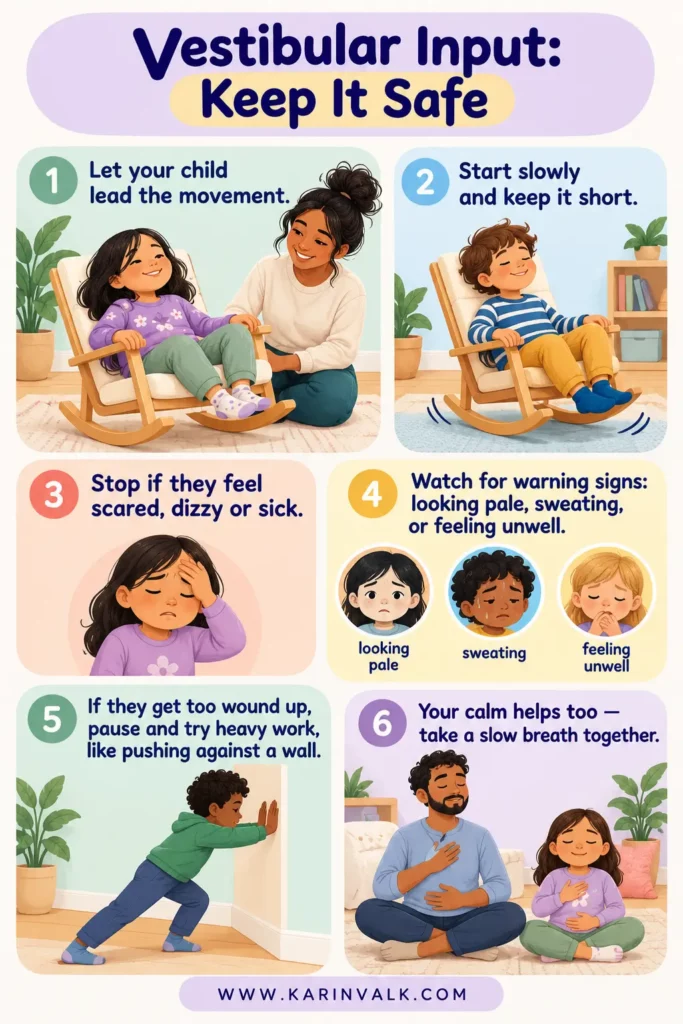
- Don’t spin your child yourself, like twirling them around or turning a swivel chair for them. If they want to spin, let them do it on their own and keep it short.
- Let your child lead the movement, and stay close.
- Tell them to say if they feel scared or sick, and stop right away.
- Watch for sensory overload: looking pale, sweating, large pupils, or feeling sick.
- If they get too wound up, stop and add heavy work, like pushing against a wall.
And your own calm is important too. Kids borrow our calm (or our chaos), so a slow breath from you goes a long way.
10 Vestibular Input Activities for Kids at Home and School
These vestibular input activities for kids are a mix of well-known classics and a few you probably haven’t tried yet. So if you’ve been searching for vestibular activities OT sessions often include, or occupational therapy activities for kids to do at home, you’ll find plenty here. Most of them are simple and use what you already have.
Best of all, many parents notice their child is calmer or more focused afterward.
These vestibular activities are great as gross motor skills activities, and some are vestibular exercises in disguise. Think of them as fun sensory activities for kids, or sensory processing activities that don’t feel like work.
And if your sensory play ideas so far have been all sand and slime, these add some movement!
Looking for vestibular input toddler ideas? Activities 2, 6, 7, and 10 are lovely vestibular activities for toddlers too. Whatever your child’s age, use the quick check above to pick one activity.
1. Vestibular Input Ideas for the Playground: Push First, Then Swing 🟢
Here’s one of my favorite vestibular input ideas, because it starts before you even reach the park. On the way, let your child carry their own backpack or help push the stroller. That bit of muscle work gets the body ready for the movement that’s coming.
Once you’re at the swing, let them get it going themselves by pumping their legs: stretching them out, then tucking them in. Pumping is great for leg awareness, because they feel their legs doing the work. Then keep the swinging back and forth at an even pace for the calming effect.
What to expect: some kids want to go high and fast straight away. That’s fine for a bit, but end with a few slower swings so they finish calm. If your child looks unsure, start low and give a few small pushes yourself first.
No playground nearby? Some schools have a sensory room for kids with a swing inside, so ask your child’s teacher. Swings are classic vestibular activities for kids, so it’s good to know where to find one.
2. Vestibular Activities for Preschoolers: Row Your Boat Partner Rocking 🟢
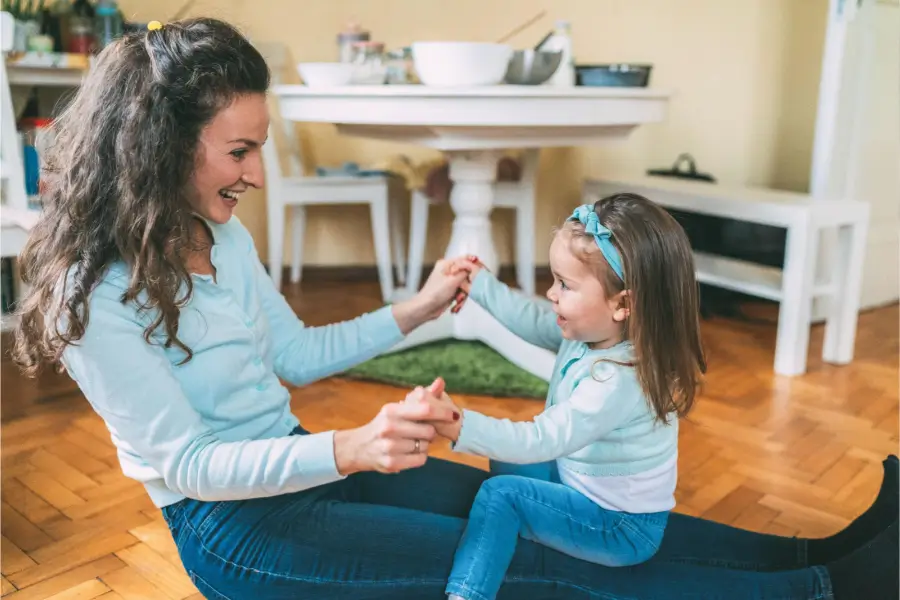
This is one of the sweetest vestibular activities for preschoolers, and all you need is a song. Sit facing each other on the floor and hold hands. Then rock forward and back while you sing “Row, Row, Row Your Boat”. Very young kids can sit on your lap instead, which makes it a great pick if you’re after vestibular input activities for toddlers.
Keep the rhythm slow for calming. Want giggles instead? Speed up for one round, then slow down again. Your body sets the rhythm here, so when you slow down, your child usually follows.
Like many sensory activities toddlers love, it’s one of those vestibular activities kids ask for again and again. It also works well in preschool movement activities, as one of the gross motor activities for preschoolers with zero equipment.
What to expect: some kids want to go faster and faster, and that’s fine for a round or two. Cautious kids often feel safer on your lap, with small rocks and your arms around them.
3. Scooter Board Activities for Kids: Rope Pulls & Bucket Toss 🟠
Scooter board activities for kids are always a hit, and these two are easy to set up in a hallway or on any smooth floor. A scooter board is a small, flat board on wheels. Your child lies on it on their tummy, or sits on it if that feels safer.
Rope pulls
Hold one end of a rope still while your child pulls themselves along it, hand over hand. Their arms do the hard work while their body glides.
Bucket toss
Put a bucket a few steps away. Lying on the scooter board, your child throws a ball or beanbag into it. Aiming from down there is harder than it looks!
What to expect: scooter boards can wind kids up, so expect giggles (and possibly a bumped chair leg). When it’s time to stop, a few slow rope pulls help them come back down.
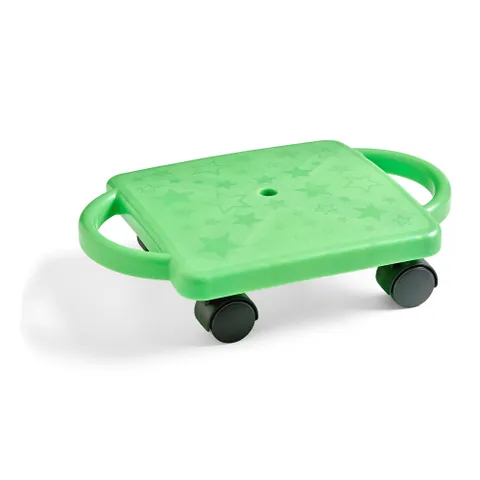
Scooter board with handles
Smooth and easy to steer, this scooter board for kids gives sensory seekers the vestibular input they’re looking for.
4. Vestibular and Proprioceptive Input Activities: Pedal, Push & Ride 🟠
Bikes and scooters are some of the easiest vestibular and proprioceptive input activities around. While they go places, the legs are busy pedaling the bike or pushing off the ground. For younger kids, a balance bike works just as well.
It’s also one of those balance and coordination activities kids are too busy having fun to notice. Want more input? Try a small hill, because going downhill adds extra vestibular motion. Cautious kids can start on flat ground and work their way up.
What to expect: seekers often head straight for the biggest hill. Let them build up to it, and keep an eye out for the overload signs from earlier. After school, a bike ride is one of the best movement activities for kids who need to burn off energy. In the Netherlands, we’re lucky we can cycle anywhere. In some other countries, it might take a little more effort to incorporate cycling in their day, but it’s worth it!
Looking for more muscle work to pair with all this movement? Try these proprioceptive activities:
5. Vestibular System Activities: Chalk Stepping Stones Kids Design Themselves 🟢
Here, your child gets to be the designer, which makes this one of the most fun vestibular system activities on the list. Ask them to draw stepping stones or a hopscotch path with chalk. On a hot day, use water and a paintbrush instead, and race to finish before the stones dry up!
Then they step or hop along their own path, feeling their feet land on every stone. For an extra challenge, add hopscotch squares: one foot on the single squares, two feet on the doubles.
Standing on one leg makes the body work harder to stay up, so expect plenty of little wobbles (that’s the balance at work).
Want to make it harder? Draw the stones further apart. To make it easier, draw them closer together.
If you’ve been looking for occupational therapy balance activities to do at home, this is a great one! You can also turn it into one of the simplest balance exercises for kids indoors, with a balance beam or a strip of tape on the floor.
What to expect: this is a good one to try first with a cautious child, because they stay in control of every step. Kids also tend to try harder on a path they designed themselves.
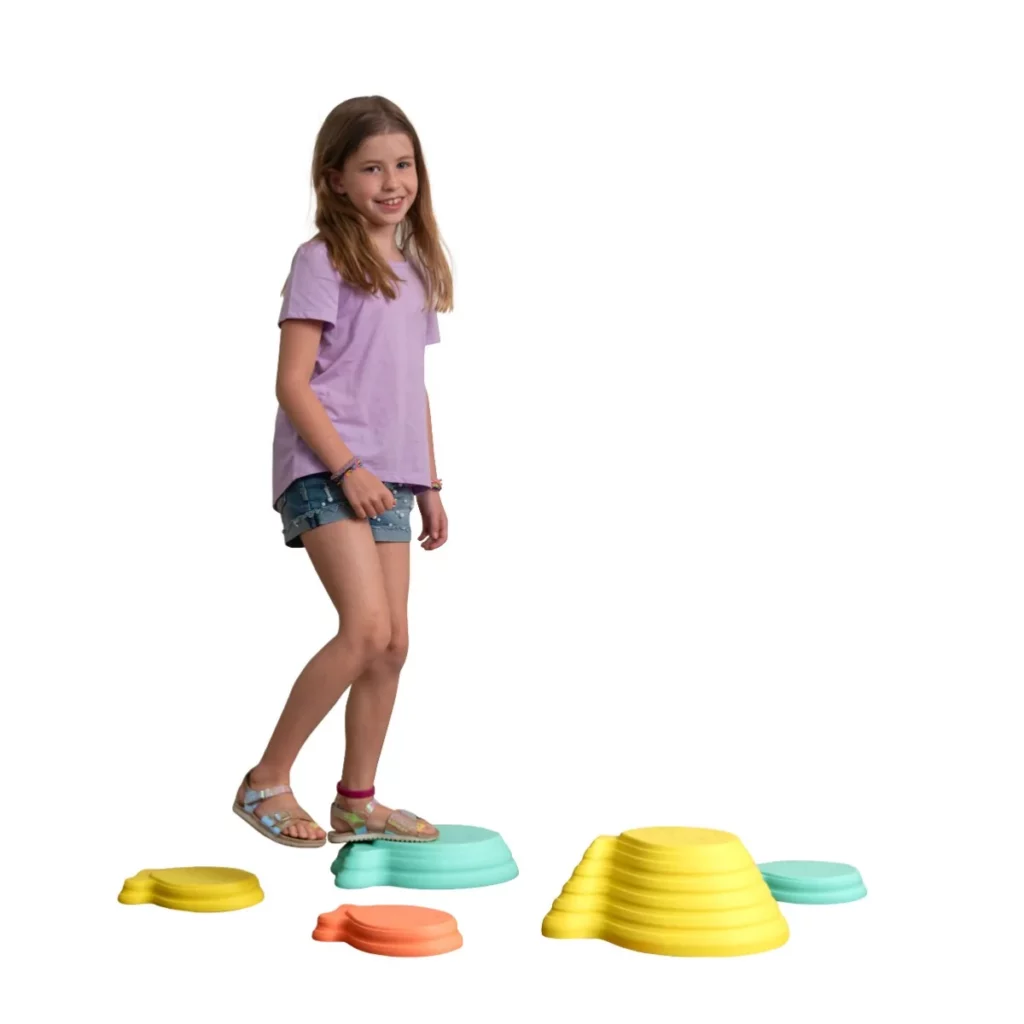
Balance Stepping Stones
These stepping stones turn any floor into a path for balance and coordination activities. So, rainy days are covered too!
6. Vestibular Input for Toddlers: Gym Ball Rolls 🟢
Gym ball rolls are a lovely way to give vestibular input for toddlers and older kids alike, and they’re easy vestibular and proprioceptive activities to do at home. Your child lies with their tummy over a large gym ball. Then they rock slowly forward onto their hands, and back onto their feet.
With hands and feet taking turns to carry their weight, the muscles work while the head moves. Slow rolls help kids wind down, which makes them a great way to end a busy afternoon. (They’re also the last, calming step in the sensory circuits further down.)
What to expect: some kids find it hard to keep the rolls slow at first. Count the rolls out loud together to set the pace. For toddlers, use a smaller ball and keep your hands on their hips.
7. Vestibular Sensory Activities: Hammock Swinging 🟢
Hammock swinging is one of the coziest vestibular sensory activities out there, and it makes for a natural calm-down spot. So it could be a great addition to a calm corner as well!
Let your child lie or sit in a low hammock while you push it slowly back and forth. Add a book or a soft toy, and you’ve got a little calm corner that moves. Or, stretching and spinning can make it a full-body workout instead!
What to expect: many kids relax quickly in a hammock. Others feel unsure about it at first. If that’s your child, let them keep one foot on the floor until they’re ready to lift it. For toddlers, keep the hammock extra low and stay close.
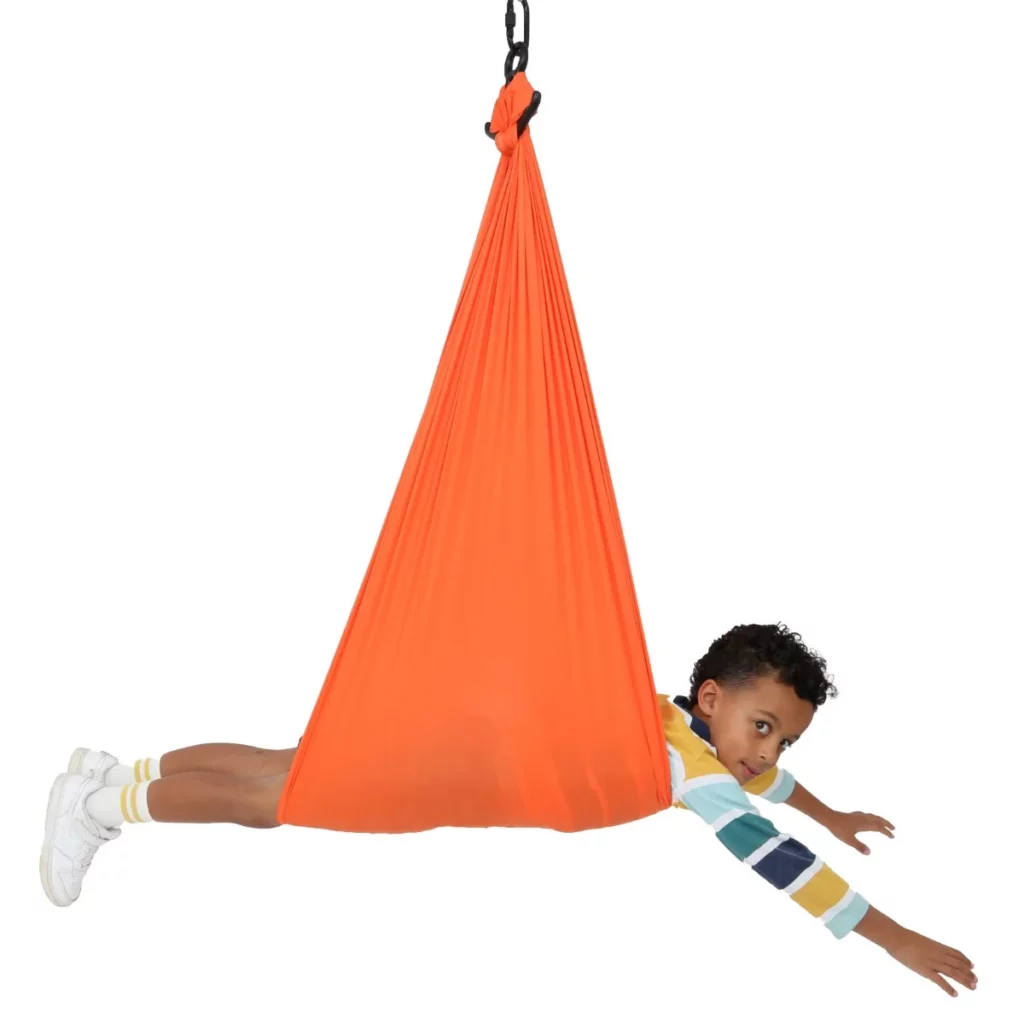
Sensory Swing Fun & Function
This cozy compression swing is great for calming vestibular input. It promotes self-regulation and active play, plus it supports the challenges of sensory integration disorder, hyperactivity or autism.
8. Vestibular Exercises for Kids: Bounce-and-Catch 🟠
Bounce-and-catch is the most alerting of all the vestibular exercises for kids on this list. Your child bounces on a small trampoline (also called a trampette) while you throw them a ball or beanbag to catch. Catching while bouncing takes some focus, so it’s harder than it sounds!
This is such a great and fun exercise for building body awareness and gross motor skills!
It’s a great wake-up after a slow afternoon, especially before homework that needs attention and concentration. Because bouncing gives strong input, a few minutes is plenty.
After bouncing, help them come back down:
- Do a few wall push-ups together.
- Take a slow belly breath in through the nose.
- Breathe out through the mouth, longer than the breath in.
- Repeat once or twice.
That longer out-breath is how I bring my own energy down in my embodiment work, and it works just as well for kids after all that bouncing.
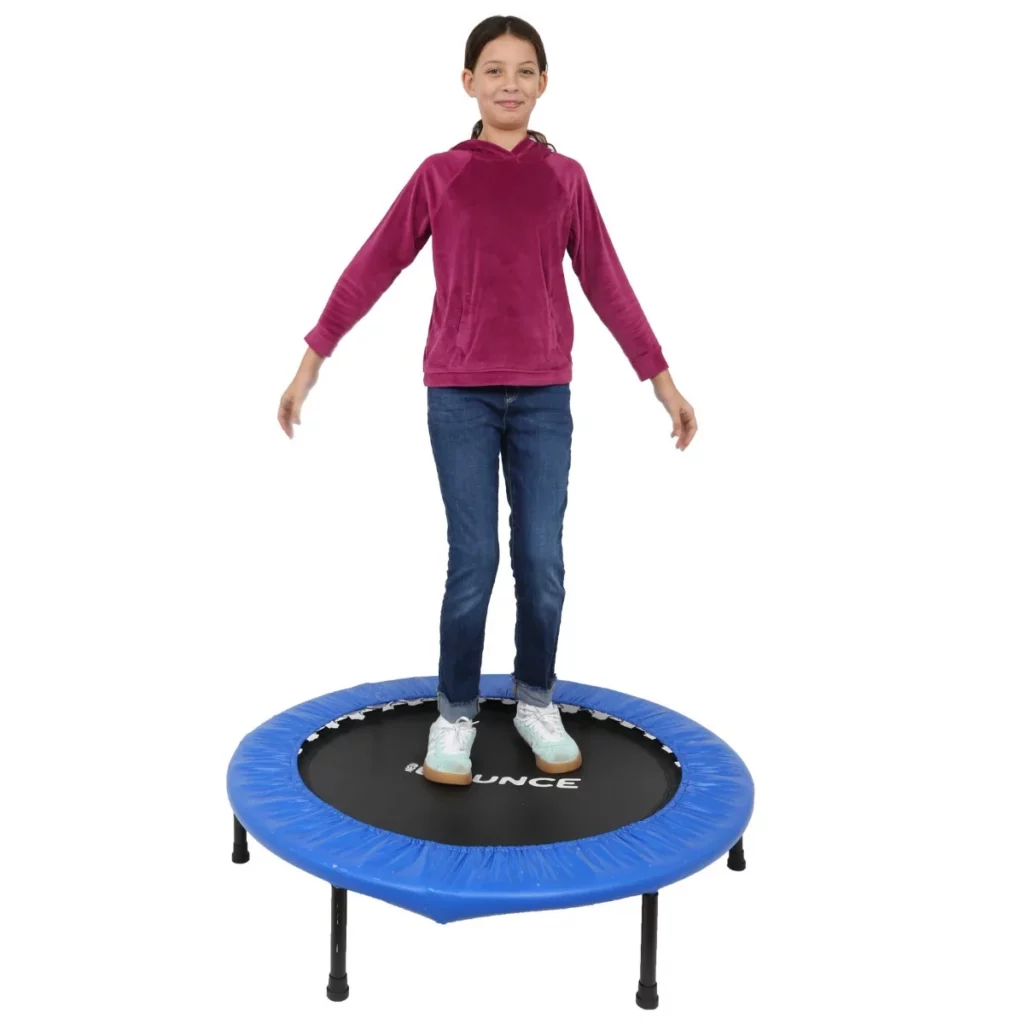
Small Trampoline Fun & Function
Foldable and easy to store, this small trampoline turns quick sensory breaks into vestibular activities for kids who need to move.
Or find a mini trampoline with handlebar for young kids here.
9. Vestibular Input at Home: Feet-on-the-Wall & Couch Hangs 🟠
Vestibular input at home can be as simple as turning the world upside down (yes, your couch is now therapy equipment).
Couch hangs: your child lies on their back on the couch or bed, with their shoulders on the cushion, and lets their head hang over the edge. Put a pillow on the floor underneath.
Feet-on-the-wall: older kids can walk their feet up a wall into a handstand, or try a downward dog yoga pose with their head between their arms.
These are perfect vestibular seeking activities for kids who love being upside down. Stay right next to them, and start with just a few seconds. Afterward, help them sit up slowly. Being upside down is already a lot of vestibular input, so sitting up too fast can make them dizzy or feel sick.
What to expect: sensory seekers will happily stay in this vestibular activity forever. Cautious kids may want to stop almost straight away, and that’s fine too.
10. Vestibular Input Before Bed: Slow Rocking 🟢
Vestibular input before bed is all about slow, even movement. That makes rocking one of the best vestibular activities kids can do before sleep. A rocking chair is perfect, with your child on your lap or in their own little rocker.
Rock back and forth at the same easy pace. While you rock, breathe out long and slow yourself.
Rocking is also one of the easiest movement activities for toddlers at bedtime. Hum the same song every night, and it soon becomes part of the routine.
What to expect: some kids wriggle for the first minute or so. Keep rocking for a few more minutes, because the even rhythm usually helps them calm down, ready for sleep.
Want more ways to wind down at bedtime? Try these fun breathing exercises for kids:
Related post: Fun Breathing Exercises for Kids: A Beginner’s Guide
How to Provide Vestibular Input in the Classroom
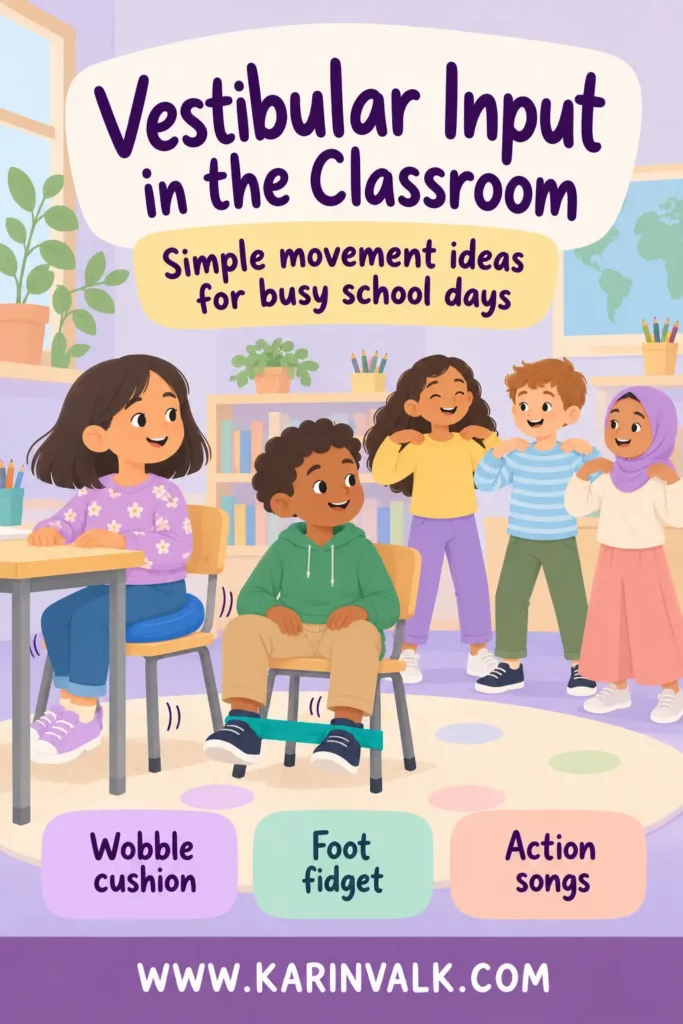
How do you provide vestibular input in the classroom when there’s no swing in sight? Luckily, these sensory classroom ideas need very little space:
- Wobble cushion: an air-filled seat cushion lets kids wiggle and balance while they sit.
- Foot fidget: a Theraband tied around the chair legs gives restless feet something to push against.
- Action songs: these are songs where kids do the moves while they sing. A classic is “Head, Shoulders, Knees and Toes.” Kids touch each body part as they sing it, so their head goes up and down all the way through. That makes it a perfect quick movement break.
Bonus for EAL learners: the actions show what the words mean. This song also exists in multiple languages, which could be fun to celebrate kids’ home languages. - Sensory circuits: a short routine at the start of the day or after lunch (see below).
These activities for vestibular input fit into any school day. Movement breaks like these are some of the simplest attention activities for kids, and they’re well worth the few minutes they take. Plus, many of the vestibular input activities for kids above work at school too, like bounce-and-catch on a trampette.
A sensory circuit takes about 15 to 20 minutes and always follows the same order:
– First come alerting activities, like bouncing or star jumps.
– Next, organizing activities that take focus, like balancing or catching a beanbag.
– Last, calming activities like wall push-ups or slow rolls over a gym ball.
You can also build these ideas into a vestibular sensory diet: a simple daily plan of movement that fits your child.
If you’re looking for other fidget chair options for the classroom, you might really love this list:
Related post: 11 ADHD chairs: The best chairs for improved focus
What Does Vestibular Input Mean?
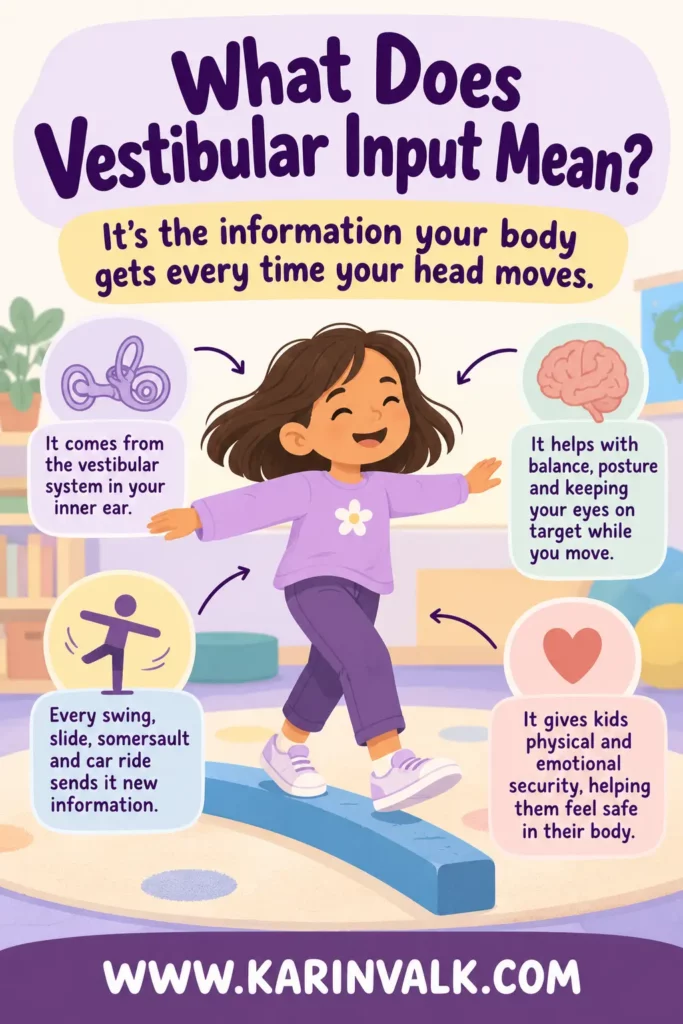
So, what does vestibular input mean? Here’s the vestibular input meaning in plain words: it’s the information your body gets every time your head moves.
It comes from the vestibular system in your inner ear. If you’ve been googling “what is vestibular input” at midnight after a teacher mentioned it, you’re in the right place.
Your vestibular system tells you if you’re right side up or upside down. It also helps with balance and posture, and it keeps your eyes on target while you move. Every swing, slide, somersault, and car ride sends it new information.
Why is vestibular input important?
Vestibular input gives kids physical and emotional security. In other words, it helps them feel safe in their body, and as an embodiment coach, that’s the part I care about most.
Back in the 1970s, occupational therapist Dr. A. Jean Ayres developed sensory integration theory. She saw the vestibular system as a key player in how all the senses work together, which is where the term vestibular integration comes from.
Vestibular input is one type of sensory input, and one of the “hidden” senses, next to proprioception and interoception. Some lists count 7 sensory systems, while others count 8 sensory systems once interoception is added.
Balance needs your vestibular sense, plus help from your eyes and proprioception. When one has a harder time, the others have to work harder (I still hold the railing on see-through stairs. Once I’m higher up and can see down between the steps, my body just stops. Balance is a team effort, and my team clearly needs a pep talk).
Curious how vestibular input fits in with the other hidden senses? Check out this post on interoception vs proprioception:
Types of Vestibular Input
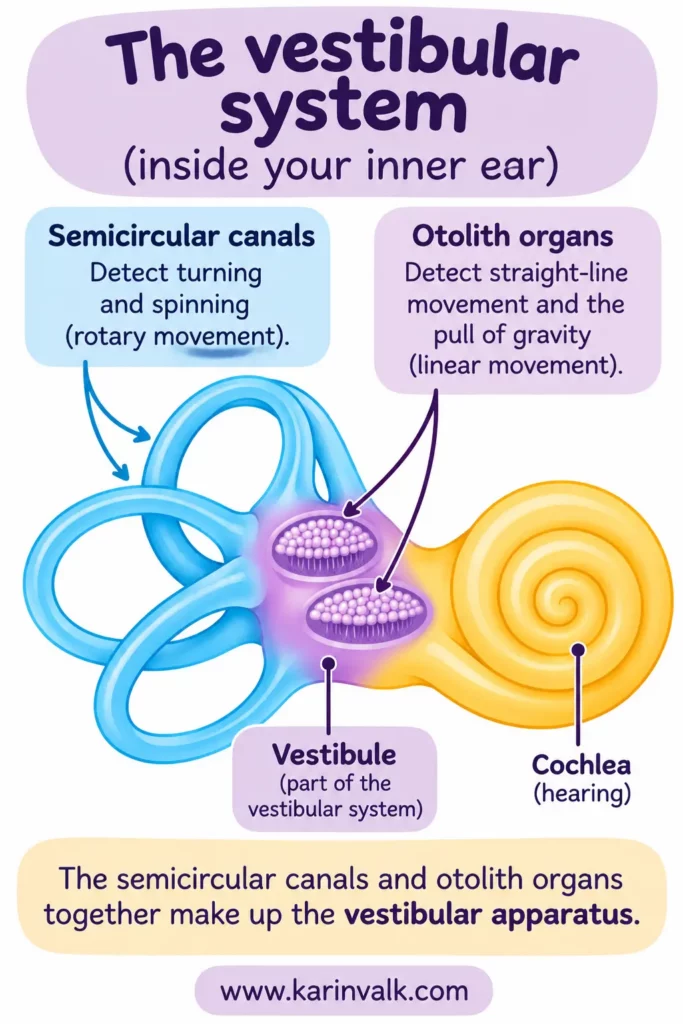
There are two main types of vestibular input, and your inner ear has a separate part for each. (Vestibular anatomy in two lines, I promise.) The semicircular canals pick up turning and spinning. The otolith organs pick up straight-line movement and the pull of gravity. Together, they make up the vestibular apparatus.
The first type is linear vestibular input: straight-line movement, like forward and back, or up and down. Think of swinging, bouncing on a trampoline, rocking in a chair, or riding a bike.
The second type of vestibular input is rotary input: spinning and rolling, like a spinning chair or rolling down a hill.
See image below for a simple vestibular system diagram. The whole vestibular system anatomy fits inside your inner ear.
Everyday Examples of Vestibular Input
Everyday examples of vestibular input are everywhere, and you don’t need special equipment. Here are some vestibular input examples you probably see every week:
- Car rides
- Swings and slides
- Seesaws and rockers
- Bikes, scooters, and other ride-on toys
Looking for more vestibular input examples? Start at the playground. A slide is a classic example of vestibular input, which may explain why kids want to go down it ten times in a row. Each vestibular activity on that list moves the head in a different way.
This is the vestibular input children get by just playing, and every bit of vestibular motion counts. That’s what makes everyday vestibular activities for kids so easy to fit in.
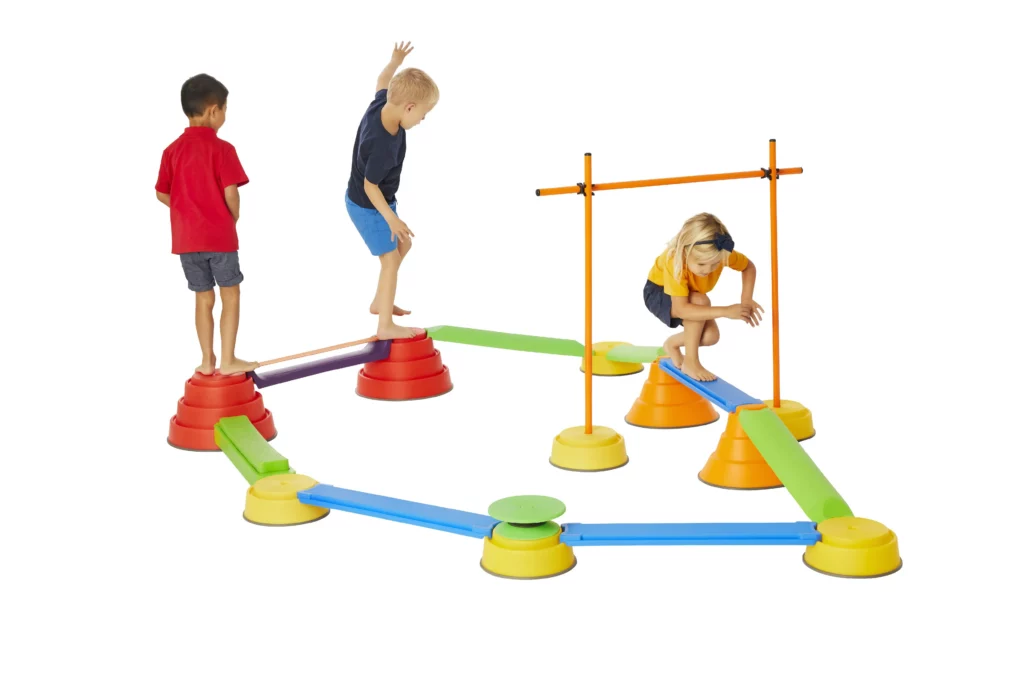
If you’re looking for a whole balance course in your classroom, home, or occupational therapy office, this one is great:
Complete Balance Course
Kids build their own path with beams, stepping stones and hurdles, so these vestibular activities feel new every time they play. Great for indoors and outdoors.
Vestibular vs Proprioceptive Input
Vestibular vs proprioceptive input is one of the most common mix-ups. So, what’s the difference between vestibular and proprioceptive input? Vestibular input tells your body how it moves through space. Proprioceptive input tells your body where its parts are and how hard your muscles are working.
Whether you say proprioceptive vs vestibular input or the other way around, the difference is where the information comes from. Vestibular input comes from the inner ear, while proprioception comes from the muscles and joints.
If you’d like to go deeper into vestibular input vs proprioception (and interoception, the third hidden sense), the interoception vs proprioception post I shared above explains the other two in detail.
Why Kids Need Proprioceptive and Vestibular Input
Kids need proprioceptive and vestibular input together, because muscle work helps the body handle movement. So pair the two whenever you can. You’ve already seen this in the activities above: carrying a backpack to the park before swinging in activity 1, and pedaling a bike in activity 4.
Short on time? Add a quick bit of muscle work before or after the movement. Weight bearing activities for kids, like wheelbarrow walks, are perfect for this.
Most kids do best with a mix of vestibular and proprioceptive activities. So if your child needs even more muscle work, my 9 proprioceptive activities for kids are a great next step. Heavy work pairs really well with everything in this post.
Signs Your Child Needs Vestibular Input: Vestibular Seeking Behaviors
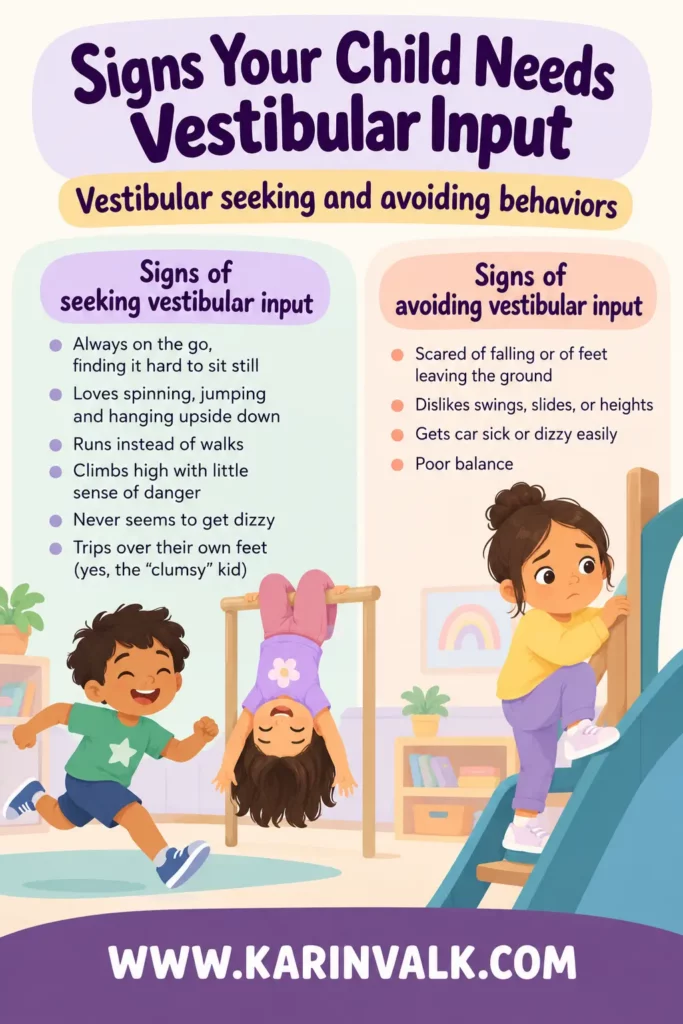
Vestibular seeking behaviors are often the first clue that a child needs more movement. But not every child reacts to movement the same way. So, what are the signs a child is seeking or avoiding vestibular input?
Occupational therapist Winnie Dunn described four patterns in how people respond to sensory input. Some seek it, some avoid it, some notice everything, and some barely seem to notice at all. A child can fit different patterns for different senses, too.
I mentioned my own Sensory Profile earlier. I did it with my friend Dr. Helen Machen-Pearce, and understanding my patterns has really helped me in my life. It’s much easier to be kinder to myself and to understand and take care of my needs.
Knowing your child’s pattern can do the same for them.
Signs of vestibular input seeking:
- Always on the go, finding it hard to sit still
- Loves spinning, jumping and hanging upside down
- Runs instead of walks
- Climbs high with little sense of danger
- Never seems to get dizzy
- Trips over their own feet (yes, the “clumsy” kid)
A sensory seeker like this isn’t being naughty. Some of what looks like challenging behavior in children is simply a body looking for movement. This is also called vestibular sensory seeking (activities 3, 4, 8 and 9 above are great sensory seeking activities for them).
Needing lots of movement doesn’t automatically mean ADHD, by the way. If you’re wondering about vestibular input ADHD links (or attention deficit of any kind) for your own child, talk to your child’s doctor or an OT.
Signs of avoiding vestibular input:
- Scared of falling or of feet leaving the ground
- Dislikes swings, slides, or heights
- Gets car sick or dizzy easily
- Poor balance
These kids need time and a sense of safety, so never push them past their limit. Let them decide how far to go.
If movement seems really hard for your child, an occupational therapist can look at their vestibular processing, including signs of vestibular dysfunction. Pediatric occupational therapy is there for exactly that. And if your child already gets vestibular therapy from an OT, ask which of the activities above fit their plan.
FAQs About Vestibular Input for Kids
Still have questions? Here are the ones parents and teachers ask most about vestibular input for kids.
What is vestibular sensory input? It’s the information about movement and balance that your inner ear sends to your brain. It tells your body which way is up and how it’s moving, while proprioception tells it where its parts are (more on vestibular vs proprioceptive input above). Curious which activities calm kids down? Start with the 🟢 ones in the list.
It can be part of the picture. In a large study of 281 autistic children, 95% showed some differences in how they process sensory input (Tomchek & Dunn, 2007). Since 2013, differences in reacting to sensory input have been part of the official autism criteria in the DSM-5.
Some autistic kids seek lots of movement, like rocking or spinning. This is sometimes called vestibular stimming. Others are very sensitive to movement. So when it comes to vestibular input, autism or not, it works best when it fits the child. An OT can help you work out which activities suit your child, and some offer sensory integration therapy.
The best activities for vestibular input depend on what your child needs right now. For calming, choose slow, back-and-forth movement like rocking, swinging, hammock swinging, or gym ball rolls. For waking up, choose faster movement like bouncing. Not sure which one your child needs? Try the quick check before the activities.
Good vestibular input toys include a scooter board, a balance board, a gym ball, a hammock swing, and a trampette. Or even a complete balance course. You can find all these in this post. For toddlers, ride-on toys and rockers work well. A balance board is great for balance exercises for kids at home, and a scooter board for kids gives both movement and muscle work. Many of these toys come straight from the sensory integration therapy room, just scaled down for home.
Looking for a sensory swing or balance board? I share my favorites in this post on sensory toys:
Related post: 17 Excellent Sensory Toys for Autism That Help All Kids