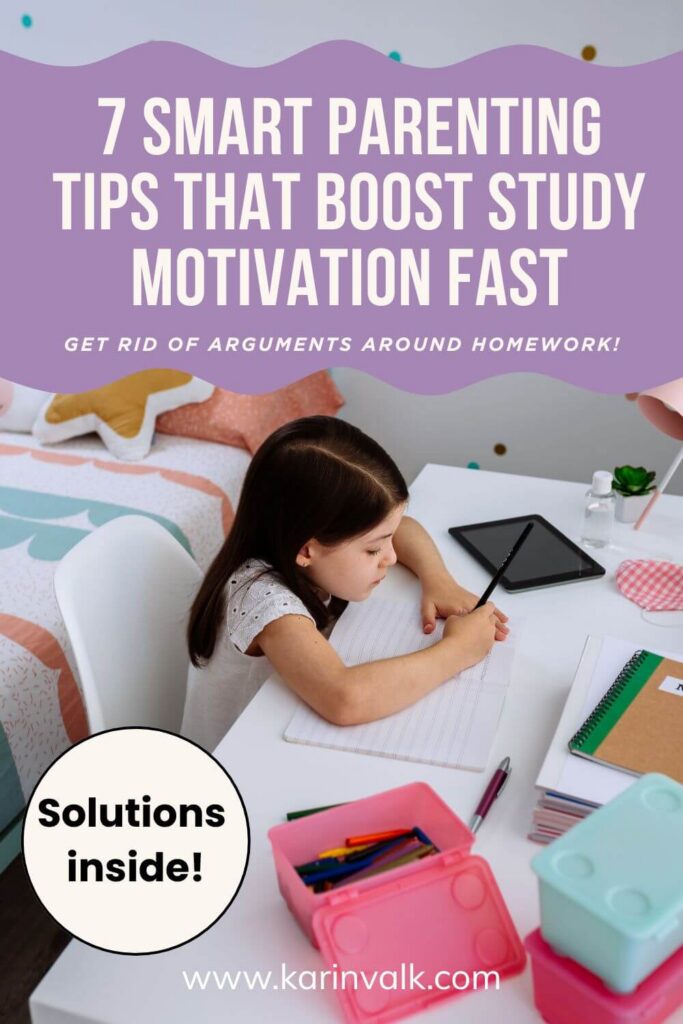
If homework time feels like a daily battle, join the club of parents worldwide. Many kids avoid studying not because they’re lazy, but because they don’t know how to approach it, don’t have the right tools or simply think it’s uninteresting. That frustration likely affects you too. When parents learn a few simple ways to build clarity, confidence, and study motivation at home, everything will be positively impacted. This post gives you practical steps you can actually use tonight.
I earn commissions when you shop through the links below at no additional cost to you. As an Amazon Associate I earn from qualifying purchases.
I sometimes include Amazon links because I know ease and accessibility matter—especially for busy parents and teachers—but I’m also working on adding more options from smaller or values-aligned businesses. I’ll keep updating this post as those become available.

If you’ve ever wondered “How do I help my child stay motivated?” or “Why does homework take so long every single day?”, this post will help. Study motivation isn’t about pressure or pushing harder (this often creates more resistance); it’s about giving kids the tools, structure, and support they need to feel capable. And the good news is you don’t need complicated systems or hours of extra time to make a real difference.
In this post, you’ll learn simple parenting tips that boost study motivation, reduce homework resistance, and build the kind of confidence that helps kids and teens work more independently.
You’ll also discover why study guidance (teaching kids how to study) works so much better than only offering homework guidance, and how small adjustments can lower stress for everyone at home.
Here’s what we’ll cover:
- how to increase study motivation
- easy study skills kids can learn quickly
- small routines that reduce stress and overwhelm
- ways parents can support study habits without taking over
How to Increase Study Motivation?
Many kids struggle with study motivation not because they don’t care, but because studying feels overwhelming, boring, or “too big” to start. Before motivation can show up, kids need a sense of clarity, calm, and “I can do this,” which comes from simple routines, small wins, and knowing how to study. When parents change from only giving homework help to offering study guidance, kids feel more capable and less resistant. This section sets the foundation so the seven tips below truly work.
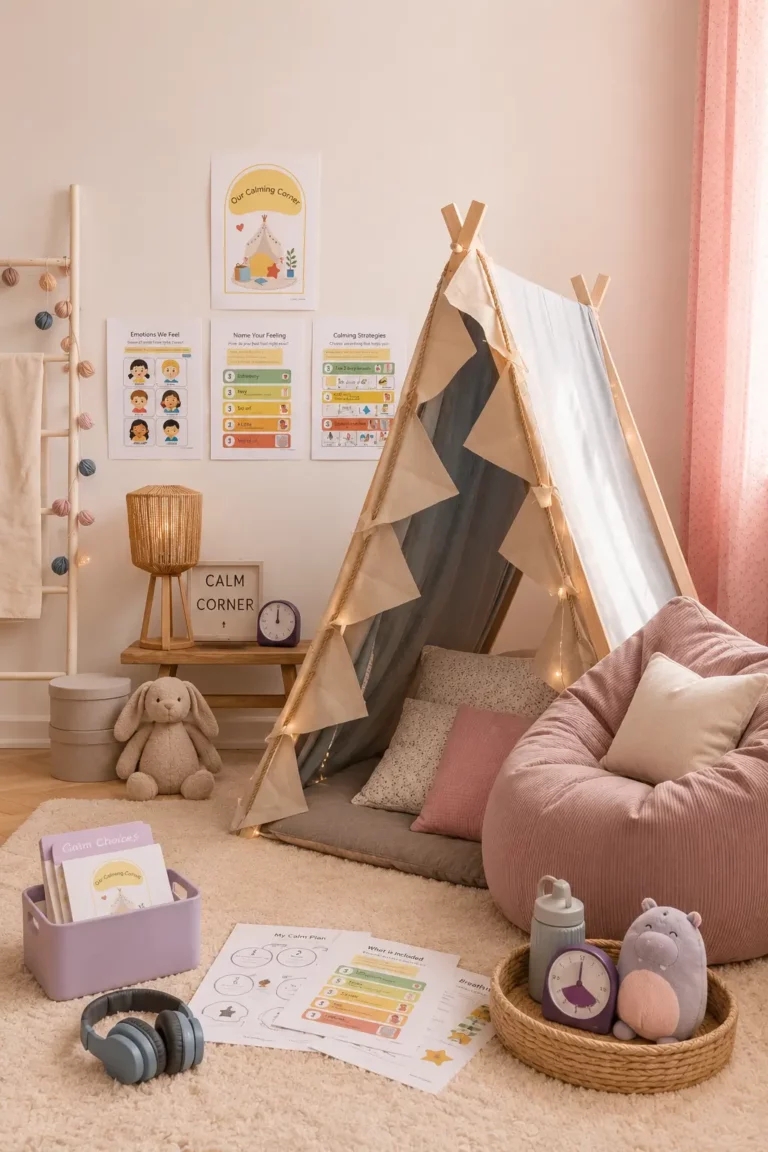
If homework time feels tense or overwhelming, this guide to self-regulation and calm spaces can make a big difference.
7 Smart Parenting Tips That Boost Study Motivation Fast
Studying doesn’t have to feel like a nightly endurance test (for you or your child). These tips are here to bring some calm back into the house, reduce the eye-rolls on both sides, and make homework time feel a little less… well, dramatic. Think of them as tools and mindset shifts that help your child feel more capable and help you release that frustration or worry, without needing an anger management course or a color-coded planner that maps every second of your and their day.
Alright, you awesome parent! Let’s get into tip #1.
1. How Can a Study Routine Improve Study Motivation?
A good study routine doesn’t just tell a child when to study, it tells them exactly how to begin, what to focus on, and what the next small step is. Kids lose motivation fast when everything feels vague (“Study math”), too big (“Do chapter 3”), or open-ended (“Go work on your project”). A routine with built-in planning lowers overwhelm instantly, which is one of the biggest research-backed motivators for kids and teens.
Try this simple structure:
- Pick a predictable daily window that fits your life (30–45 minutes after school, or after dinner on busy days).
- Do the same 2-minute setup every time: water, quick bathroom break, materials on the table, phone away.
- Write down the exact starting point (Math, Chapter 3, p. 21 — Questions 1–4). This turns a huge task into a clear beginning.
- Choose the first small, easy step (read 5 lines, answer 1 question, highlight keywords). Kids need a very simple and clear first step, which leads to an early “I’ve started” win.
- Use a tiny checkpoint halfway (“What’s the next step?”). This keeps the brain out of overwhelm and in momentum.
- End with a closing ritual: pack the bag, check tomorrow’s page, celebrate the smallest win and tick off completed tasks in their planner. Accomplishment is a great feeling and it builds confidence quickly!
This kind of routine works because it builds predictability, lowers emotional friction, and gives kids a sense of progress, all of which increase study motivation.

2. How Do I Teach Study Skills for Kids Without Taking Over?
Most parents try to help by sitting next to their child and explaining the homework, but that’s homework guidance, not study guidance. Study guidance is about teaching kids how to learn so they eventually don’t need you hovering over their shoulder like an unpaid personal assistant.
When kids understand simple study strategies, motivation goes up because the work finally feels doable instead of mysterious and overwhelming.
Here are a few foundational skills you can teach without taking over:
- Show them how to preview a task: look at the title, headings, questions, and length before starting. It creates instant clarity and reduces “I don’t get it” panic.
- Teach them to chunk the work: break reading a long text into one paragraph at a time, math into 3-question blocks instead of 10 in a row, writing into “idea → write sentence → check spelling.” This step is especially important for neurodivergent students, as overwhelm can “freeze” our brain in seconds.
- Use “Explain it back.” After they read or watch something, ask them to tell you the gist in one or two sentences. This builds retention and confidence fast. It also shows them where they might need more support or what they understand thoroughly already.
- Model a simple study plan: “First read this part, then answer these two questions, then check the example.” Kids copy what they see.
- Step back as soon as they show understanding. Your job is to guide the process, not do the thinking for them.
When kids learn even one or two of these skills, they stop feeling lost because they have tools to fall back on, and a child who doesn’t feel lost is a child who’s much more willing to study!
If your child has trouble focusing or concentrating then a chair that improves focus might be just what you need for their study space!
Related post: 11 ADHD chairs: The best chairs for improved focus
3. How Do Small Steps Improve Study Motivation?
Kids don’t necessarily get overwhelmed because the work is hard; they get overwhelmed because the work feels endless. Breaking tasks into small, finishable steps gives the brain quick wins, and quick wins are basically motivation fuel. It’s the difference between “Write your essay” (hello, meltdown) and “Write the first sentence” (suddenly possible).
Here’s how to make small steps work:
- Turn every task into a first step: “Open the book,” “Read the example,” “Do question 1.” Once they start, the rest feels less dramatic.
- Use 10–15 minute focus bursts instead of long marathon sessions; kids with ADHD especially benefit from short, defined work periods with visible progress. A time-timer is a great visual tool (I swear by it! You think these blog posts write themselves? ;))
- Help them label the steps, not the subject: instead of “Study science,” try “Make a 3-item list of what I need to review.”
- Celebrate micro-completions: finishing one page, one exercise, one paragraph. This builds confidence far faster than waiting for the final result and moving on to the next thing right away. Decide on little celebrations together, and find some for yourself too! Dishes done, dinner ready, survived the work day. Got out of bed. Celebrate, celebrate, celebrate! (Yes, I’m aware that these can feel like huge tasks, not micro. Find whatever works for you!).
For multilingual learners, small steps also give processing time: they can move through tasks without the panic of “I have to do all of this in a second language”. And when the task feels bite-sized instead of impossible, study motivation increases for everyone involved.
Taking tasks bit by bit also means they can check for understanding more often and catch misunderstandings early, instead of getting to the end of a long task only to realize they missed the point.
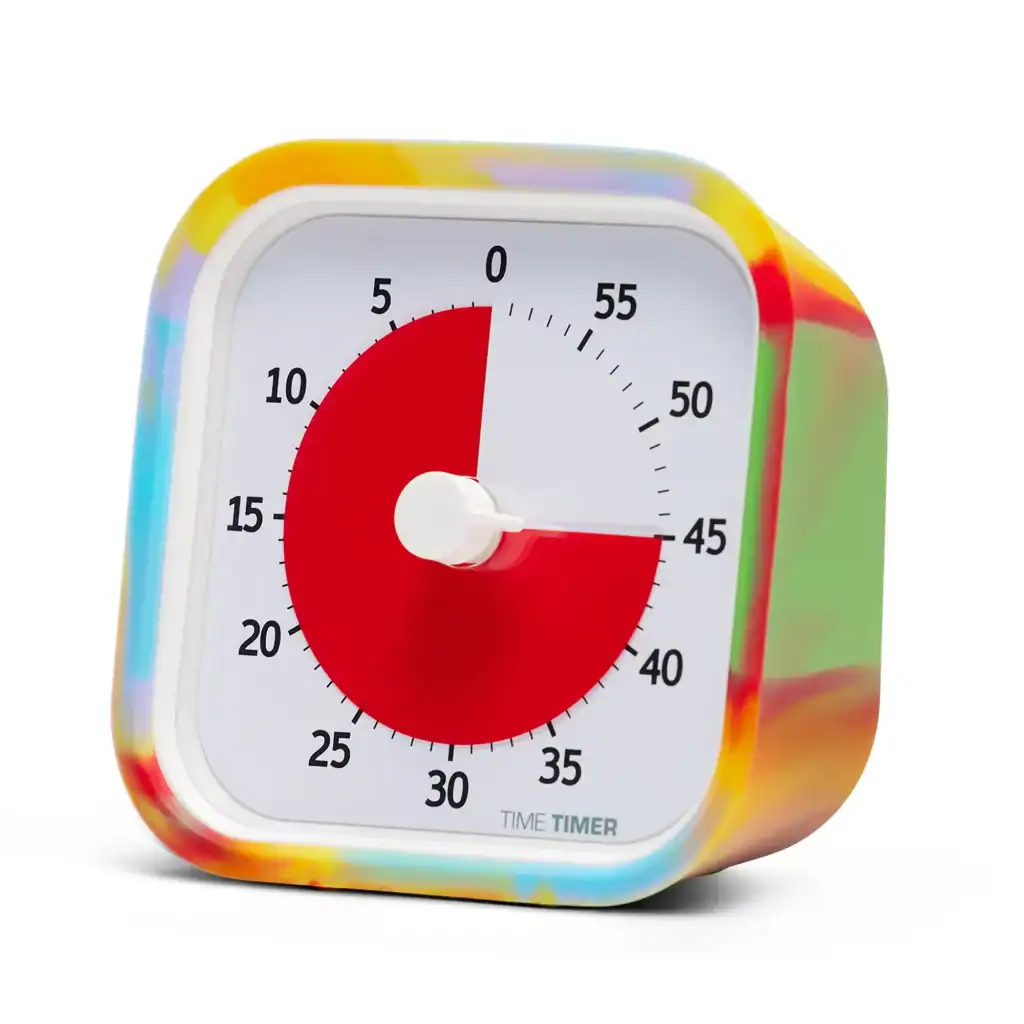
Time Timer Study Aid
A visual countdown timer designed for kids: helps segment study into clear bursts and supports routines and focus: exactly what research shows improves study motivation and reduces overwhelm.
If you’re choosing a visual timer, I compared my twelve favourite visual timers for focus, homework, and study:
4. How Much Homework Guidance Helps With Homework Motivation?
There’s a sweet spot between “You’re on your own, good luck” and “Move over, I’ll do it.” Kids need enough homework guidance to feel supported, but not so much that they become dependent on you or lose all sense of ownership. When you hover too closely, motivation can disappear because the work no longer feels like their achievement; when you disappear entirely, motivation can lack because the work feels too big or confusing.
Here’s how to stay in the helpful middle:
- Be available, not glued to their side. Sit nearby, doing your own calm task, so they feel supported without having you breathe down their neck like a helicopter made of good intentions.
- Let them try first. Even if you know the answer immediately, give them space to form a thought. Confidence grows from effort and noticing that they can do it themselves.
- Use short, clear check-ins: “What’s the question asking?” “What’s your first step?” This directs them back to thinking, not relying on you.
- Help only with clarity, not with doing. If the directions are confusing, explain them… but let them do the actual work.
This balance is especially helpful for multilingual learners, who often just need help interpreting instructions, not necessarily with the content itself.
And for neurodivergent learners, predictable check-ins prevent overwhelm without removing autonomy. When kids feel supported and capable, homework motivation naturally increases.
My personal favorite thing to ask kids is: “What do you think? I don’t know, so convince me”. I do this when they ask me for answers or “is this correct?”. It makes them rethink and double-check what they’re doing, relying on themselves instead of the approval of an adult.
Disclaimer: This needs some patience and consistency. My son hated it when I did this because he likes a quick answer and speed through his homework. But as time went by he accepted it and reflected more and more regularly on how confident he was about his own knowledge of the topic.

5. How Do Quick Wins Increase a Child’s Motivation to Study?
Kids (and honestly, all humans) love the feeling of finishing something. It’s motivating, encouraging, and gives the brain that hit of “hey, I can do this.” Quick wins work because they shrink the emotional distance between starting and succeeding. Instead of staring at an intimidating task, your child gets an immediate sense of progress, which makes the next step less scary and far more likely to happen.
Here’s how to build quick wins into studying:
- Start with the easiest task first: something they can finish in 2–5 minutes. This switches the brain from avoidance to momentum.
- Use tiny “finish lines”: complete one paragraph, solve one example, write one sentence, answer two questions.
- Acknowledge progress as fact, not praise: “You got those two questions done,” instead of “Good job!” This builds internal confidence instead of performance pressure.
- Let them see the win visually: crossing off a box, highlighting a finished task, or moving a sticky note from “to-do” to “done.” This is surprisingly powerful in building confidence and study motivation.
- For multilingual learners, quick wins reduce cognitive load and give them more frequent checkpoints to confirm they’re on the right track.
- For neurodivergent learners, short successes help regulate overwhelm and create a cycle of momentum instead of shutdown.
When kids experience progress early, they become less resistant and more engaged, no pep talks or motivational speeches required.
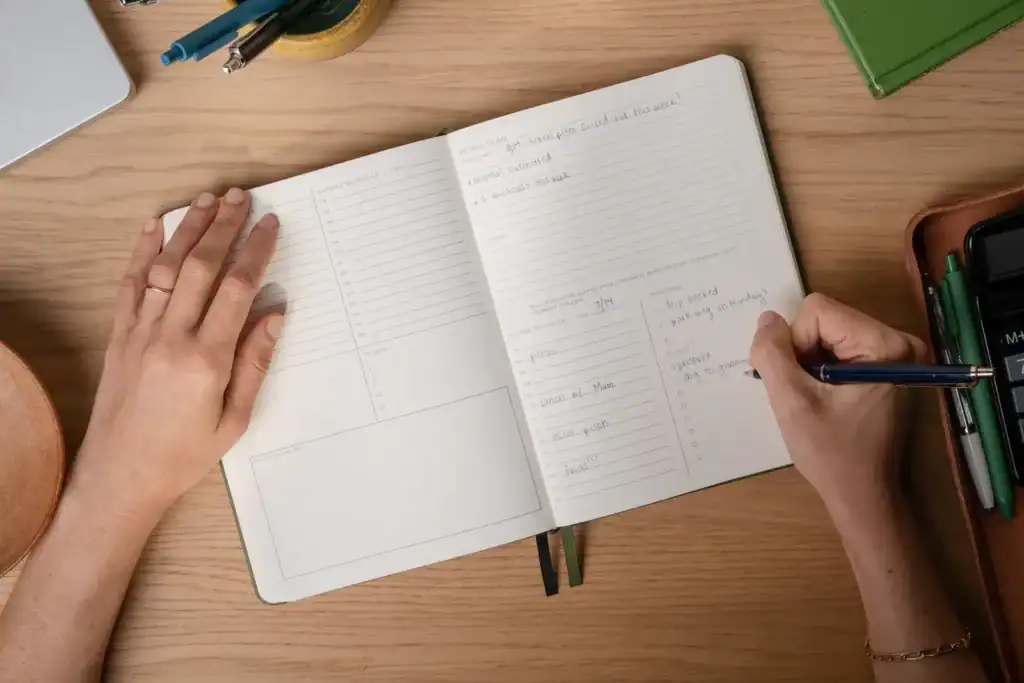
Anecdote Yearly Planner
This is a perfect planner for students, allowing anyone to both plan and keep track of goals, their daily schedule and tasks. With super helpful layout! (They have a daily planner too!)
6. How Do I Reduce Distractions to Improve Study Motivation?
Kids can focus on TikTok for 40 minutes straight but somehow lose all concentration the second a textbook appears. Nowadays completely normal, and completely fixable. A few small tweaks to the study environment can make a huge difference in study motivation because the brain doesn’t have to fight off a thousand tiny temptations.
Here’s what works:
- Clear the visual noise: remove extra books, switches, toys, or open tabs; kids focus better when their brain isn’t scanning the whole room for better things to do.
- Use “one device only” time: if they need the laptop, the phone goes away; if they need a notebook, both screens go away. (Feel free to check with their mentor, as in my experience kids at home say it’s a matter of life and death, they NEED their phone or laptop, while the mentor might have set very different rules with them). When expectations are clear and consistent both at home and at school, it creates a calm sense of predictability. The trick is to stay consistent. Good luck! 🙂
- Keep materials within reach so they don’t leave the table (because once they stand up, motivation usually evaporates somewhere between the fridge and the hallway).
- Create a low-sensory spot for neurodivergent learners: soft lighting, fewer sounds, and predictable routines help their nervous system stay regulated. Noise-canceling headphones in a house full of siblings can be a life-saver, especially paired with a binaural beats playlist!
- For multilingual learners, it helps to translate a few key words or rewrite the task clearly in their home language, so they don’t waste all their focus trying to decode the instructions instead of actually studying. This way they don’t have to literally get lost in translation.
Simple environment changes like these remove resistance and make studying feel less like a battle and more like a manageable task.

Sony Premium Noise-Canceling Headphones
My daughter and I LOVE our noise-canceling headphones. Especially in combination with binaural beats for focus (e.g. on Spotify or Youtube)… guaranteed productivity boost!
7. How Can Parenting Tips Improve My Child’s Study Motivation?
Kids study better when they feel emotionally safe, connected to you, and not afraid of disappointing anyone. This is why the right parenting tips and strategies can boost study motivation more than any fancy system.
When the atmosphere at home feels calm and supportive, their nervous system relaxes, their thinking becomes more clear, and the work stops feeling like a test of their worth.
Good time to reflect for yourself: how much do you (knowingly or unknowingly) link their results to their worth? Many of us might have been raised thinking we’re worthy when we’re productive and successful, but what do we want to teach our kids? We can say all the right things, but if our belief is they’re worthy when they succeed (whatever that may mean to you), then they WILL pick up on that.
Ok…back to the practical steps.
Here are small but important parenting techniques that make a real difference:
- Stay calm during tough moments. Kids borrow your regulation; if you’re steady, they steady.
- Use curious questions instead of corrections. “What’s your plan?” “What’s the first step?” “Where do you want to start?”
- Validate the real struggle. “Yep, this is boring, and I know you’d rather do anything else… AND you can do this.”
- Keep your support predictable. Whether it’s a quick check-in, sitting nearby, or reviewing the plan, consistency builds security.
- Acknowledge effort, not perfection. “You stuck with it,” or “You figured out the next step,” builds the kind of confidence that fuels more independent studying.
For multilingual learners, emotional safety helps them take risks in a second language; for neurodivergent learners, calm connection helps them shift out of overwhelm so they can actually begin.
When kids feel supported instead of judged, motivation rises naturally, and studying becomes less of a battle and more of a shared effort.
If you want a tool that instantly supports resilience and a “try-again” mindset during homework time, these growth mindset cards belong in every home.

Growth Mindset Cards That Build Real Resilience
A set of simple, powerful prompts that help kids pause, reflect, try again, and be proud of themselves. Designed to support reflection skills, confidence, and motivation. Especially helpful during homework and study routines, or afterwards as reflection tools.
You can also explore my full guide on building a growth mindset at home for even more practical ideas.
FAQs About Study Motivation
Studying looks different in every home, but the questions parents ask are often the same. These quick, research-backed answers will help you understand what’s really going on and what actually works.
Kids stay motivated when tasks feel clear, manageable, and worth doing. Research shows that motivation rises when children experience autonomy (making small choices), competence (feeling capable), and connection (feeling supported). You can support this by giving them a predictable study routine, letting them choose the first task, and using small steps that build confidence quickly. Motivation is much easier when their brain feels safe, calm, and not overwhelmed.
Refusal is usually a signal of overload, not defiance. Studies on student engagement show that kids shut down when tasks feel too big, unclear, or when they fear failure. Pause the moment, reconnect (“I get that this feels hard”), then shrink the task to one tiny step they can do right now. Often, starting with something easy — or clarifying the instructions — is enough to bring them out of shutdown and into next-step mode.
Short bursts (10–20 minutes), clear goals, and a distraction-reduced space are consistently shown to improve focus. Keep materials ready, limit devices to the one they’re studying on, and use small checkpoints (“What’s your next step?”).
For multilingual learners, rewriting instructions or translating keywords reduces cognitive load so more attention goes toward the actual task.
For neurodivergent learners, predictable routines, body movement breaks, and low-sensory environments support regulation and focus.
Teens naturally prioritize immediate rewards (friends, fun, downtime) because their reward system matures before their planning system; it’s biological, not personal. The key is linking studying to outcomes they value: more freedom later, less stress tomorrow, passing a class they want off their plate, or reaching a personal goal. Pair this with small, achievable steps and autonomy (“Do you want to start with math or English?”). Teens work better when they feel respected rather than managed (don’t we all?).
And in all honesty, I see this with my own teens and those of friends, too. Sometimes they absorb things far better from another adult than from us at home. A study coach, counselor, or even a trusted teacher or friend with an education background can make the whole process feel less personal and far less tense, and it often saves everyone’s energy for the moments that matter. If that is not available, and for all other days by ourselves, setting clear expectations and agreements is incredibly helpful.
This works for us:
Plan together (it’s a skill they’re often not taught).
Then they decide the exact time they will start a task (e.g. 6pm, not “I’ll do it later today”).
Decide a fun break (agree on it, Fortnite is not a smart 15-minute break, guaranteed arguments about having to finish something in the game)
Another round of studying.
They show me briefly what they’ve learned/done, tick it off in the planner or move it to another day if not completed.
This helps tremendously with learning how much time a task truly takes.
I leave them alone for the rest of the night, no more school talk.
Disclaimer: this is the ideal situation, but we definitely have our frustrating days in which nothing goes according to plan, and that’s normal. Perfection doesn’t exist; as long as you’re trying to create a structure that helps your children succeed more often than not!
If you’re setting up a supportive study space at home, these study room decor ideas are great:
Final Thoughts on Study Motivation
Study motivation increases when kids feel calm, capable, and supported. And, very important, when the plan is clear enough that they always know the next small step. In my experience (both as a teacher and a parent), planning is the cornerstone. When kids know exactly what to do, in what order, and how much time it will likely take, studying becomes manageable instead of overwhelming.
Clear communication and mutual agreements make an enormous difference here. Many arguments happen simply because parents think they were clear… and kids think the opposite. Taking a minute to spell out expectations, agree on start times, and decide together what “done” looks like removes unnecessary conflict and gives everyone a shared direction.
With structure, planning, and honest communication, motivation becomes less about pushing and more about helping your child feel capable. These small, consistent steps build confidence over time. You’ve got this, and your child does too!